
Research area
Repair Research Peptides
Repair research peptides are compounds that scientists study in models of tissue injury, wound repair and gut inflammation. This area holds BPC-157, TB-500 and KPV, plus two blends that include them. Nearly all of the published work on these peptides comes from cells and animals, not people.
5 in stock
In this area
The compounds
Plain outer packaging on every order.
Orders leave Traralgon in the afternoon during business hours, then travel tracked to your door.
Certificates of analysis available on request.
If a vial arrives damaged, broken or not what you ordered, message us within 7 days with a photo and we'll replace it free.
Background
About this area
What repair research covers
When tissue is damaged, cells have to move into the gap, new blood vessels have to form and inflammation has to settle. Repair research studies the signals behind each of those steps, usually in rodents or in cells grown in dishes.
Thymosin beta-4 is a good example of such a signal. A 2012 review explains that platelets and immune cells release it after an injury. It binds actin, the protein cells use to crawl from place to place.
Online, this group is often called recovery peptides, and one pairing is nicknamed the Wolverine stack. Those are marketing names. In the papers, the topic is simply tissue repair biology.
Sources: Goldstein AL et al, Thymosin beta 4: a multi-functional regenerative peptide, Basic properties and clinical applications, Expert Opin Biol Ther, 2012. Gwyer D, Wragg NM, Wilson SL, Cell Tissue Res, 2019. Healthy Male (Andrology Australia), What you need to know about the Wolverine stack.
Where each compound comes from
BPC-157, TB-500 and KPV are each a piece of a larger natural molecule, and each piece comes from a different place. The two blends combine them.
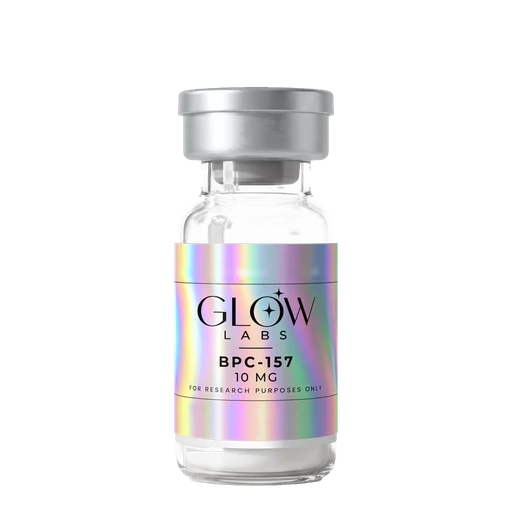
- BPC-157: a 15 residue chain, GEPPPGKPADDAGLV, described as a fragment of a protein in gastric juice.
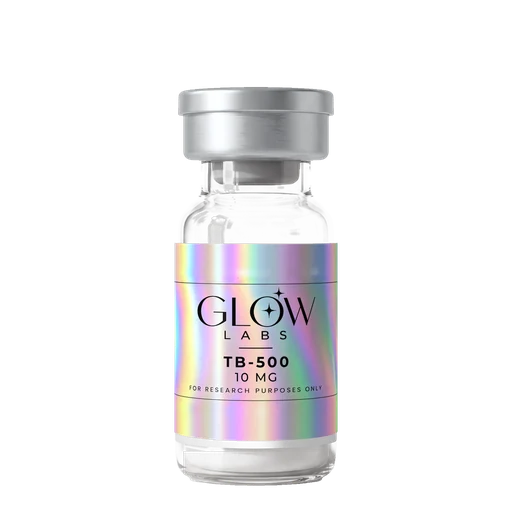
- TB-500: the acetylated stretch LKKTETQ, residues 17 to 23 of thymosin beta-4.
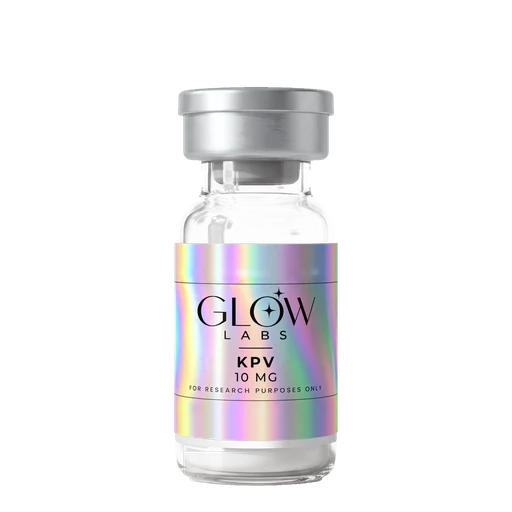
- KPV: the tripeptide Lys-Pro-Val, which matches the last three residues of the hormone alpha-MSH.
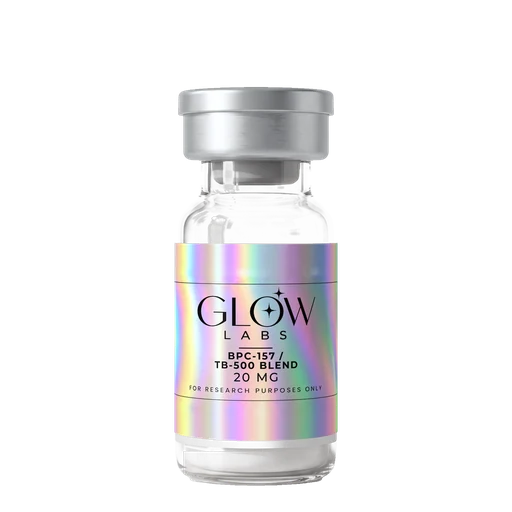
- BPC-157 / TB-500 Blend: the first two peptides in one 20mg vial.
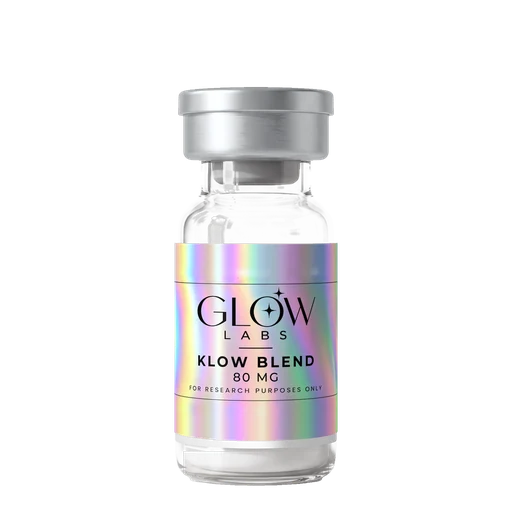
- KLOW Blend: four peptides on one label, GHK-Cu (50mg) with BPC-157, TB-500 and KPV at 10mg apiece.
Our guides cover BPC-157, TB-500, TB-500 versus BPC-157, KPV and the KLOW blend one at a time.
Sources: PubChem compound record: BPC-157 (CID 9941957), US National Library of Medicine. Gwyer D, Wragg NM, Wilson SL, Cell Tissue Res, 2019. Ho EN et al, J Chromatogr A, 2012. PubChem compound record: Lys-Pro-Val (alpha-MSH 11-13) (CID 125672), US National Library of Medicine.
What the studies examined
BPC-157 has the biggest literature, but it is almost all animal work. A 2019 review of tendon, ligament and muscle studies found that most were done in small rodents. A 2025 systematic review screened 544 articles and kept 36. Of those, 35 were preclinical and only one was a clinical study, and the authors found no clinical safety data.
For TB-500, most of the biology was worked out on the full parent protein. The 2012 thymosin beta-4 review covers skin, eye, heart and brain injury models. The short fragment itself appears mainly in a 2012 paper that set out how to detect it in horse urine and plasma.
KPV was studied in two 2008 mouse papers on colitis. One showed that PepT1, a carrier for small peptides, moves KPV into gut and immune cells, and both measured markers of bowel inflammation.
Sources: Gwyer D, Wragg NM, Wilson SL, Cell Tissue Res, 2019. Vasireddi N et al, Emerging use of BPC-157 in orthopaedic sports medicine: a systematic review, HSS J, 2025. Goldstein AL et al, Thymosin beta 4: a multi-functional regenerative peptide, Basic properties and clinical applications, Expert Opin Biol Ther, 2012. Ho EN et al, J Chromatogr A, 2012. Dalmasso G et al, PepT1-mediated tripeptide KPV uptake reduces intestinal inflammation, Gastroenterology, 2008. Kannengiesser K et al, Melanocortin-derived tripeptide KPV has anti-inflammatory potential in murine models of inflammatory bowel disease, Inflamm Bowel Dis, 2008.
Why blends are harder to study
We could not find a published study that tests any of these blends as a set. When two or more peptides share a vial, an observation cannot be tied to any single one of them. That is why researchers who need clear answers usually start with single compounds.
Blends also need more careful certificates. Each component needs a separate mass spectrometry identity test. PubChem gives a quick guide: BPC-157 sits near 1419 g/mol, TB-500 near 889, KPV near 342 and GHK, the peptide part of GHK-Cu, near 340. Most of these show up as clearly separate signals. GHK and KPV differ by about 2 g/mol, so the KLOW identity test needs high resolution mass spectrometry. Healthy Male, an Australian men's health body, points out the same evidence gap for the BPC-157 and TB-500 pairing.
Sources: PubChem compound record: BPC-157 (CID 9941957), US National Library of Medicine. PubChem compound record: TB-500 (CID 62707662), US National Library of Medicine. PubChem compound record: Lys-Pro-Val (alpha-MSH 11-13) (CID 125672), US National Library of Medicine. PubChem compound record: GHK (glycyl-L-histidyl-L-lysine) (CID 73587), US National Library of Medicine. Healthy Male (Andrology Australia), What you need to know about the Wolverine stack.
Regulatory status
Australia's Poisons Standard places BPC-157 and TB-500 in Schedule 4 and also in Appendix D, clause 5. Under that clause, a person needs legal authority, such as a valid prescription, to possess them.
The TGA's warnings about unapproved peptides mention BPC-157 and TB-500 by name. A 2026 TGA media release about a New South Wales raid listed a combined BPC-157 and TB-500 product among the goods taken.
The World Anti-Doping Agency added BPC-157 to its Prohibited List in 2022, so it is banned at all times in tested sport. Glow Labs supplies every compound on this page for laboratory research only.
Sources: Therapeutic Goods (Poisons Standard, October 2026) Instrument 2026 (F2026L01327): Schedule 4 entries for BPC-157 and TB-500 and Appendix D, clause 5, Federal Register of Legislation, Australian Government. Healthy Male (Andrology Australia), TB-500 in Australia: what you need to know. Therapeutic Goods Administration, Peptide products (topic page). Therapeutic Goods Administration, TGA flexes its muscle against illegal peptides and steroids, Media release, 2026. World Anti-Doping Agency, The Prohibited List. UK Anti-Doping, Major changes to the 2022 Prohibited List: what you need to know. Sport Integrity Australia, Substance education: BPC-157.
FAQ
Your questions
What are the key differences between TB-500 and BPC-157?
They come from different proteins. BPC-157 is a 15 residue fragment linked to a stomach protein, while TB-500 is a seven residue piece of thymosin beta-4. The side by side guide compares their structure and research.
Has anyone studied BPC-157 and TB-500 together?
Not in any peer reviewed paper we could find. Each peptide has its own animal literature, but the pair has not been tested as a combination.
What is a peptide stack?
It is an informal name for two or more peptides combined. The Wolverine stack, for example, means BPC-157 with TB-500. The word comes from online forums, not from the research papers.
Is TB-500 legal in Australia?
TB-500 is listed in Schedule 4 and Appendix D, clause 5 of the Poisons Standard, so nobody may possess it without authority under the law of their state or territory. It is not an approved medicine, and the TGA names it among unapproved peptide products. Healthy Male adds that a research only label does not make it legal.
Sources: PubChem compound record: BPC-157 (CID 9941957), US National Library of Medicine. PubChem compound record: TB-500 (CID 62707662), US National Library of Medicine. Healthy Male (Andrology Australia), What you need to know about the Wolverine stack. Therapeutic Goods (Poisons Standard, October 2026) Instrument 2026 (F2026L01327): Schedule 4 entries for BPC-157 and TB-500 and Appendix D, clause 5, Federal Register of Legislation, Australian Government. Therapeutic Goods Administration, Peptide products (topic page). Healthy Male (Andrology Australia), TB-500 in Australia: what you need to know.
Explore
Other areas
Not sure which compound fits your research?
Ask on WhatsApp