Discreet packaging
Plain outer packaging on every order.

 Research use only
Repair research
KPV peptide Australia orders are for a tiny research compound, just three amino acids: lysine, proline and valine. It is the tail end of alpha-MSH, a natural melanocortin hormone, and Glow Labs supplies it in 10mg freeze-dried vials for lab study. Orders are sent tracked from our Gippsland base and arrive in 2-3 days across Australia.
Size
$65 AUD per vial, plus $10 tracked shipping per order
Research use only. Not for human consumption.
Plain outer packaging on every order.
Orders leave Traralgon in the afternoon during business hours, then travel tracked to your door.
Certificates of analysis available on request.
If a vial arrives damaged, broken or not what you ordered, message us within 7 days with a photo and we'll replace it free.
What it is
KPV is L-lysyl-L-prolyl-L-valine. PubChem also lists it as alpha-MSH (11-13), because it matches the last three residues of that hormone.
With a mass of about 342 g/mol it is one of the smallest peptides in our range.
Sources: PubChem compound record: Lys-Pro-Val (alpha-MSH 11-13) (CID 125672), US National Library of Medicine.
Questions about KPV?
Ask on WhatsAppA 2008 study in Gastroenterology asked how KPV gets into gut cells. It found that PepT1, a transporter for small peptides, carries KPV into intestinal cells, and it tested KPV in two mouse models of colitis.
A second 2008 paper, in Inflammatory Bowel Diseases, also studied KPV in mouse models of bowel inflammation.
Both are cell and animal studies. We are not aware of completed controlled human trials.
Sources: Dalmasso G et al, PepT1-mediated tripeptide KPV uptake reduces intestinal inflammation, Gastroenterology, 2008. Kannengiesser K et al, Melanocortin-derived tripeptide KPV has anti-inflammatory potential in murine models of inflammatory bowel disease, Inflamm Bowel Dis, 2008.
Alpha-MSH is a 13 residue hormone that acts on melanocortin receptors. KPV keeps only its last three residues, positions 11 to 13.
The 2008 Gastroenterology study pointed to transport into cells through PepT1. A second 2008 study found the effect was at least partly independent of the MC1R melanocortin receptor.
That makes KPV a useful tool for questions about small peptide uptake in the gut.
Sources: Dalmasso G et al, PepT1-mediated tripeptide KPV uptake reduces intestinal inflammation, Gastroenterology, 2008. Kannengiesser K et al, Melanocortin-derived tripeptide KPV has anti-inflammatory potential in murine models of inflammatory bowel disease, Inflamm Bowel Dis, 2008. PubChem compound record: Lys-Pro-Val (alpha-MSH 11-13) (CID 125672), US National Library of Medicine.
Short peptides still absorb water. Bachem advises weighing out freeze-dried peptide quickly and closing the container tightly, after first letting it reach room temperature in a desiccator.
For long holding, keep it below -15 °C and away from light.
Sources: Bachem, Handling and storage guidelines for peptides, Knowledge Center. JPT Peptide Technologies, How to store peptides: best practices for researchers.
Specification
| Name | KPV |
|---|---|
| Sizes | 10mg |
| Form | Lyophilised powder |
| Vial | 3 ml glass vial |
| Cap | Brushed silver-grey |
| CAS number | 67727-97-3 |
| Formula | C16H30N4O4 |
| Molar mass | 342.43 g/mol |
| Sequence | Lys-Pro-Val |
| Structure | A tripeptide equal to residues 11 to 13 of alpha-melanocyte stimulating hormone. |
| Storage | Keep the powder frozen in a sealed vial with desiccant. |
| Certificate | On request, how to ask |
| Status | In stock |
| Use | Laboratory research only |
Sources: PubChem compound record: Lys-Pro-Val (alpha-MSH 11-13) (CID 125672), US National Library of Medicine. Bachem, Handling and storage guidelines for peptides, Knowledge Center. JPT Peptide Technologies, How to store peptides: best practices for researchers.
Regulatory status
KPV is not named anywhere in Australia's Poisons Standard (October 2026). That absence does not make it an approved medicine. We sell KPV purely as a bench reagent, not as a medicine, a supplement or a skin product.
Testing
Certificates of analysis are available on request. Ask us on WhatsApp before or after you order.
How ordering works
Add compounds and quantities. No account needed.
One tap writes your whole order into a WhatsApp message.
We confirm stock and your total, share payment details, then ship tracked.
FAQ
A tripeptide of lysine, proline and valine. It is the C-terminal end of alpha-MSH.
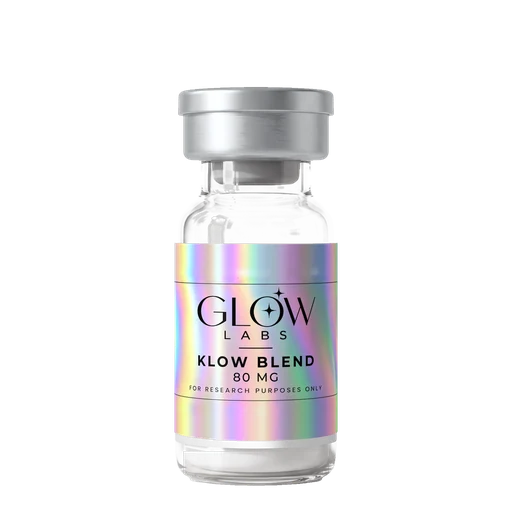
Alpha-MSH does. KPV matches positions 11 to 13 of that 13 residue hormone, so it is a small part of it, not the same molecule. KPV is also one of the four peptides in our KLOW blend, 10mg per vial by the label.
Mouse and cell studies have looked at gut inflammation and at how the PepT1 transporter carries KPV into cells.
Australia's Poisons Standard, as of October 2026, has no KPV entry. That gap is not TGA approval, and this answer is not legal advice. Glow Labs sells KPV only for laboratory research, never for human or animal use.
Keep the dry vial sealed in a freezer with a desiccant pack close by. Peptides take up water from the air, so let the vial warm before you open it, work quickly, and close it tightly afterwards. Store it dark, and avoid holding it in solution for long.
Sources: PubChem compound record: Lys-Pro-Val (alpha-MSH 11-13) (CID 125672), US National Library of Medicine. Dalmasso G et al, PepT1-mediated tripeptide KPV uptake reduces intestinal inflammation, Gastroenterology, 2008. Kannengiesser K et al, Melanocortin-derived tripeptide KPV has anti-inflammatory potential in murine models of inflammatory bowel disease, Inflamm Bowel Dis, 2008. Therapeutic Goods (Poisons Standard, October 2026) Instrument 2026 (F2026L01327), Federal Register of Legislation, Australian Government. Bachem, Handling and storage guidelines for peptides, Knowledge Center.
In the catalogue
Questions before you order?
Ask on WhatsApp