The short answer
People search for these two together because they are often sold together. Chemically, though, they have little in common. TB-500 is a fragment of a cell protein that grips actin. BPC-157 is a standalone, stomach-derived sequence with no known natural role of its own.
Both have mostly been studied in animals. Neither has a completed controlled trial in people.
Sources: Esposito S et al, Drug Test Anal, 2012. Józwiak M et al, Pharmaceuticals (Basel), 2025. Mendias CL et al, Sports Med, 2026.
Questions about this guide?
Ask on WhatsAppSide by side
This table puts chemistry and Australian status in one place.
| Feature | TB-500 | BPC-157 |
|---|---|---|
| Parent | thymosin beta-4 (43 amino acids) | a protein in gastric juice |
| Length | 7 amino acids | 15 amino acids |
| Sequence | Ac-LKKTETQ | GEPPPGKPADDAGLV |
| Formula | C38H68N10O14 | C62H98N16O22 |
| Mass | 889.0 g/mol | 1419.5 g/mol |
| PubChem CID | 62707662 | 9941957 |
| Main study type | analytical and animal | animal, mainly rats |
| TGA | not on the ARTG | not on the ARTG |
| WADA class | S2, growth factors | S0, non-approved |
Sources: PubChem compound record CID 9941957 (BPC-157), US National Library of Medicine. PubChem compound record CID 62707662 (TB-500), US National Library of Medicine. Sport Integrity Australia, BPC-157 substance education page. Sport Integrity Australia, Thymosin Beta-4 peptide hormone information.
Origins
TB-500 first appeared as a veterinary product. In 2012 a horse racing lab in Hong Kong built a test for its misuse in horses. That same year a Ghent doping lab tested it and found its key ingredient was the acetylated 17 to 23 section of thymosin beta-4. Read more in our TB 500 guide.
BPC-157 came out of research in Croatia in the early 1990s, where a group isolated it as a fragment of a larger gastric protein they called "body protection compound". Our guide on what BPC-157 is covers its history.
Sources: Esposito S et al, Drug Test Anal, 2012. Józwiak M et al, Pharmaceuticals (Basel), 2025. Ho EN et al, J Chromatogr A, 2012.
Proposed mechanisms
The two are thought to work in different ways, though both ideas come from lab and animal work.
- TB-500: the fragment holds the actin binding part of thymosin beta-4. The parent protein helps control how cells build their internal frame and move, so the fragment is assumed to do something similar.
- BPC-157: researchers suggest it affects blood vessel growth signals, such as the VEGF pathway, and nitric oxide, mostly based on rat tissue studies.
Neither idea has been tested in people.
Sources: Józwiak M et al, Pharmaceuticals (Basel), 2025. McGuire FP et al, Curr Rev Musculoskelet Med, 2025. Sun HQ et al, The beta-thymosin enigma, Ann N Y Acad Sci, 2007.
What was tested
BPC-157
A 2025 systematic review found 36 studies that met its rules. Of these, 35 were preclinical, mostly rat models of tendon, ligament, muscle and bone damage. One was a small look back at clinic records in people with knee pain.
TB-500 and thymosin beta-4
Here the full protein has the bigger record, with cell, animal and some clinical studies. The fragment itself has mostly been studied by doping labs working out how to detect it.
The two together
A 2026 study in rats is a rare direct test. It split 32 rats into four groups after Achilles tendon surgery: no treatment, BPC-157, TB-500, and both. The authors reported that giving both did not add anything beyond either peptide alone. They called the work exploratory and said longer studies were needed.
Sources: McGuire FP et al, Curr Rev Musculoskelet Med, 2025. Mendias CL et al, Sports Med, 2026. Biçer O et al, Jt Dis Relat Surg, 2026. Vasireddi N et al, Emerging use of BPC-157 in orthopaedic sports medicine: a systematic review, HSS J, 2025.
Why sold together
BPC-157 and TB-500 are often packaged as one blend, sometimes marketed as the "Wolverine Stack". The TGA referred to products like this in its August 2026 media release about seizures. That is a market fact, not a finding that the pair works better. The only published animal test of the pair that we could find, above, did not find an added effect.
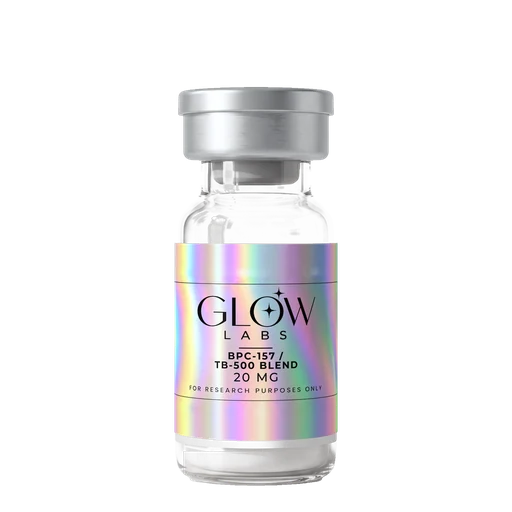
Glow Labs stocks the BPC-157 and TB-500 blend for labs that want both in one vial.
Sources: Biçer O et al, Jt Dis Relat Surg, 2026. Therapeutic Goods Administration, TGA flexes its muscle against illegal peptides and steroids, Media release, 2026.
Still unknown
- whether either peptide is safe in people, since rigorous human safety data are scarce
- whether the TB-500 fragment acts like the full protein
- how much of the BPC-157 record holds up, since only a handful of research groups have studied it in depth
- whether products sold online contain what their labels claim
Sport Integrity Australia also warns there is serious concern that thymosin beta-4 increases the spread and growth of cancer cells.
Sources: McGuire FP et al, Curr Rev Musculoskelet Med, 2025. Mendias CL et al, Sports Med, 2026. Sport Integrity Australia, Thymosin Beta-4 peptide hormone information. Gwyer D et al, Cell Tissue Res, 2019.
Status in Australia
The TGA named both peptides in its April 2026 alert on unapproved peptide products. The alert adds that a disclaimer limiting a product to research does not, alone, make its supply lawful. The October 2026 Poisons Standard lists BPC-157 and thymosin beta-4, which covers TB-500, in Schedule 4, and Appendix D clause 5 makes them illegal to hold without authority, such as a prescription. Sport Integrity Australia lists both as prohibited at all times for athletes.
Sources: Sport Integrity Australia, BPC-157 substance education page. Sport Integrity Australia, Thymosin Beta-4 peptide hormone information. Therapeutic Goods Administration, Understanding your responsibilities when importing, compounding and supplying unapproved peptide products, Safety advisory, 13 April 2026. Poisons Standard, October 2026 (F2026L01327): Schedule 4 and Appendix D, clause 5.
Research use only
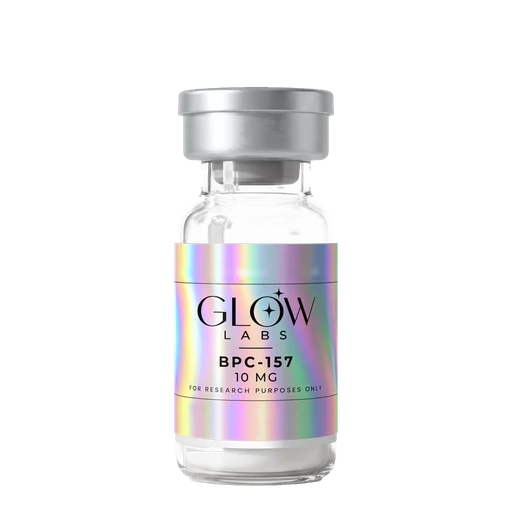
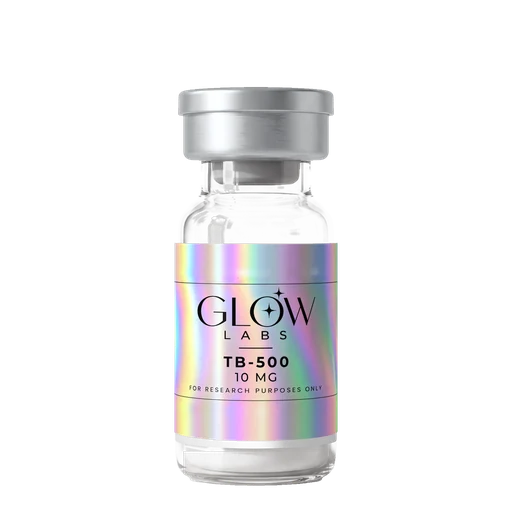
Glow Labs sells BPC-157 research vials, TB-500 research vials and the blend as lyophilised powder for laboratory work. None of them is for people or animals.
Glow Labs posts orders from Gippsland with tracking, and delivery takes 2-3 days.
FAQ
Are TB-500 and BPC-157 the same kind of peptide?
No. TB-500 is a piece of thymosin beta-4, a protein found in cells. BPC-157 is based on a gastric juice protein. Their sequences, lengths and masses are all different.
Are both banned in sport?
Yes. BPC-157 is in class S0 and thymosin beta-4, including TB-500, is in class S2. Both are banned in and out of competition.
Has the blend been studied?
Only once in animals that we could find. A 2026 rat tendon study tested both together and reported no extra effect over either one alone. In people, the only record is a 2021 clinic chart review in which four patients got both, with no control group.
Sources: Biçer O et al, Jt Dis Relat Surg, 2026. Sport Integrity Australia, BPC-157 substance education page. Sport Integrity Australia, Thymosin Beta-4 peptide hormone information. Lee E, Padgett B, Altern Ther Health Med, 2021.
Sources
- PubChem compound record CID 9941957 (BPC-157), US National Library of Medicine.
- PubChem compound record CID 62707662 (TB-500), US National Library of Medicine.
- Esposito S et al, Drug Test Anal, 2012.
- Józwiak M et al, Pharmaceuticals (Basel), 2025.
- McGuire FP et al, Curr Rev Musculoskelet Med, 2025.
- Sun HQ et al, The beta-thymosin enigma, Ann N Y Acad Sci, 2007.
- Mendias CL et al, Sports Med, 2026.
- Biçer O et al, Jt Dis Relat Surg, 2026.
- Sport Integrity Australia, BPC-157 substance education page.
- Sport Integrity Australia, Thymosin Beta-4 peptide hormone information.
- Therapeutic Goods Administration, TGA flexes its muscle against illegal peptides and steroids, Media release, 2026.
- Therapeutic Goods Administration, Understanding your responsibilities when importing, compounding and supplying unapproved peptide products, Safety advisory, 13 April 2026.
- Vasireddi N et al, Emerging use of BPC-157 in orthopaedic sports medicine: a systematic review, HSS J, 2025.
- Lee E, Padgett B, Altern Ther Health Med, 2021.
- Ho EN et al, J Chromatogr A, 2012.
- Gwyer D et al, Cell Tissue Res, 2019.
- Poisons Standard, October 2026 (F2026L01327): Schedule 4 and Appendix D, clause 5.