Discreet packaging
Plain outer packaging on every order.

 Research use only
Repair research
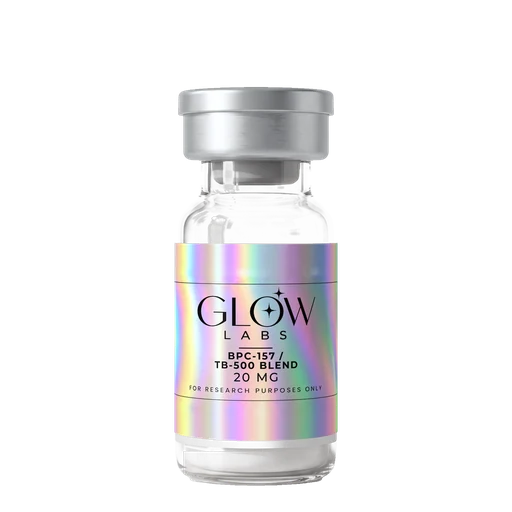
KLOW peptide Australia listings refer to a four-peptide research blend, and the Glow Labs vial holds 80mg in total of BPC-157, TB-500, GHK-Cu and KPV, per the vial label. It sits in our repair research range and is sold for laboratory study only. We ship it from Gippsland, Victoria, on a tracked service that takes 2-3 days door to door in Australia.
Size
$140 AUD per vial, plus $10 tracked shipping per order
Research use only. Not for human consumption.
Plain outer packaging on every order.
Orders leave Traralgon in the afternoon during business hours, then travel tracked to your door.
Certificates of analysis available on request.
If a vial arrives damaged, broken or not what you ordered, message us within 7 days with a photo and we'll replace it free.
What it is
Per the vial label, each 80mg KLOW vial is made up of four peptides:
These figures come from the supplier's label. Certificates of analysis are available on request.
Questions about KLOW Blend?
Ask on WhatsAppEach description here is about the single peptide as studied on its own, not about the mix.
GHK-Cu is a copper-bound tripeptide built from glycine, histidine and lysine. Reviews by Pickart and colleagues cover lab work on skin cells and gene expression.
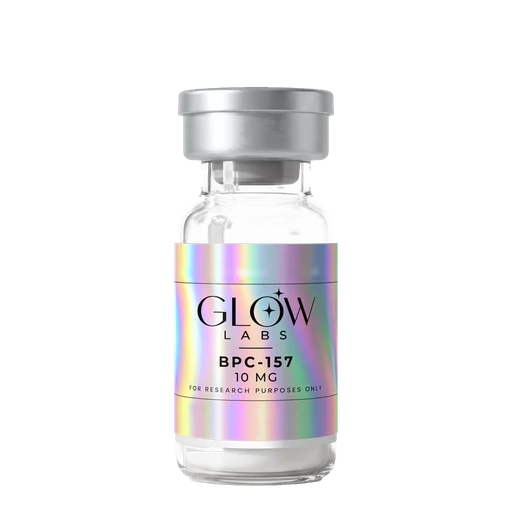
BPC-157 is a 15 residue chain that papers call a gastric pentadecapeptide. A 2019 review by Gwyer and colleagues covers rodent studies of tendon, ligament and muscle tissue.
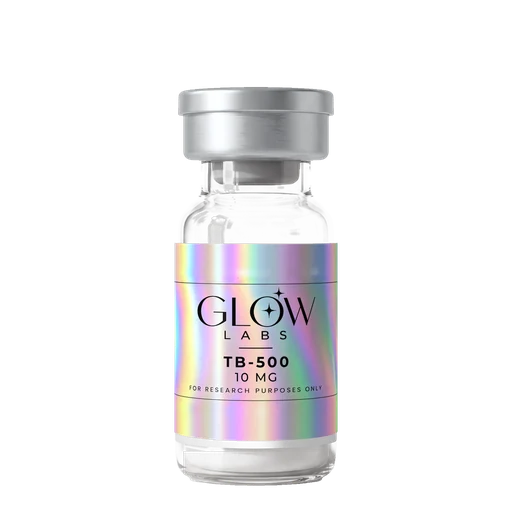
TB-500 is the acetylated seven residue stretch LKKTETQ taken from thymosin beta-4. A 2012 study set out how to detect TB-500 in horse urine and plasma for doping control.
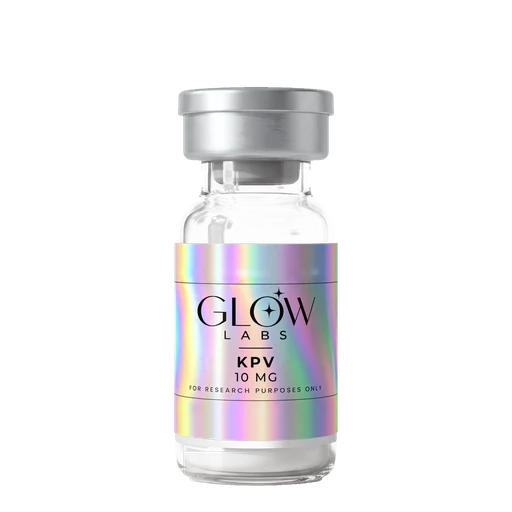
KPV is the tripeptide Lys-Pro-Val, the last three residues of alpha-MSH, studied in mouse models of gut inflammation.
Sources: PubChem compound record: Prezatide copper (copper tripeptide-1, GHK-Cu) (CID 71587328), US National Library of Medicine. Pickart L, Margolina A, Int J Mol Sci, 2018. PubChem compound record: BPC-157 (CID 9941957), US National Library of Medicine. Gwyer D, Wragg NM, Wilson SL, Cell Tissue Res, 2019. Ho EN et al, J Chromatogr A, 2012. PubChem compound record: Lys-Pro-Val (alpha-MSH 11-13) (CID 125672), US National Library of Medicine. Dalmasso G et al, PepT1-mediated tripeptide KPV uptake reduces intestinal inflammation, Gastroenterology, 2008.
We found no published study that tests these four peptides together. Nothing on this page should be read as describing an effect of the blend.
The 50mg of GHK-Cu is five times the weight of each other part, which matters when reading any analysis of the vial.
A good certificate lists each of the four peptides with its own mass spectrometry identity result and measured amount. PubChem masses give a quick cross-check: about 1419 g/mol for BPC-157, 889 for TB-500, 403 for the GHK-Cu complex and 342 for KPV.
If any of the four is missing from the report, the label figures for that component are unconfirmed.
Sources: PubChem compound record: BPC-157 (CID 9941957), US National Library of Medicine. PubChem compound record: TB-500 (CID 62707662), US National Library of Medicine. PubChem compound record: Prezatide copper (copper tripeptide-1, GHK-Cu) (CID 71587328), US National Library of Medicine. PubChem compound record: Lys-Pro-Val (alpha-MSH 11-13) (CID 125672), US National Library of Medicine.
The dry form is the most stable form of any peptide. Suppliers recommend -20 °C or colder, in a dark spot or amber vial, with desiccant to stop moisture uptake.
Bachem notes that peptides tend to pick up moisture from the air, so keep this cake dry. Open the vial as rarely as possible, because repeated freezing and thawing harms peptides.
Sources: JPT Peptide Technologies, How to store peptides: best practices for researchers. Bachem, Handling and storage guidelines for peptides, Knowledge Center.
Specification
| Name | KLOW Blend |
|---|---|
| Sizes | 80mg |
| Form | Lyophilised powder (four-peptide blend) |
| Vial | 3 ml glass vial |
| Cap | Brushed silver-grey |
| Sequence | Per the vial label: BPC-157 10mg, TB-500 10mg, GHK-Cu 50mg, KPV 10mg |
| Structure | Four separate peptides freeze-dried together. Amounts are from the supplier label. |
| Storage | Freeze it sealed with desiccant and keep it dark; let it warm fully before opening. |
| Certificate | On request, how to ask |
| Status | In stock |
| Use | Laboratory research only |
Sources: Bachem, Handling and storage guidelines for peptides, Knowledge Center. JPT Peptide Technologies, How to store peptides: best practices for researchers.
Regulatory status
Three of KLOW's four components, BPC-157, TB-500 and GHK-Cu, are named by the TGA as examples of unapproved peptide products. The TGA states that a research use only disclaimer does not make the supply of these products lawful.
The national Poisons Standard (October 2026) goes further for two of them. BPC-157 and TB-500 sit in Schedule 4 and in Appendix D, clause 5, which bars possession without authority from the state or territory where the vial is kept.
Sources: Therapeutic Goods Administration, Peptide products (topic page). Therapeutic Goods Administration, Understanding your responsibilities when importing, compounding and supplying unapproved peptide products, Safety advisory, 13 April 2026. Therapeutic Goods (Poisons Standard, October 2026) Instrument 2026 (F2026L01327): Schedule 4 and Appendix D, clause 5 entries for BPC-157 and TB-500, Federal Register of Legislation, Australian Government.
Testing
Certificates of analysis are available on request. Ask us on WhatsApp before or after you order.
How ordering works
Add compounds and quantities. No account needed.
One tap writes your whole order into a WhatsApp message.
We confirm stock and your total, share payment details, then ship tracked.
FAQ
Per the vial label: GHK-Cu 50mg, BPC-157 10mg, TB-500 10mg and KPV 10mg, 80mg in total. Certificates of analysis are available on request.
Not as a combination. Each of the four peptides has its own separate literature, mostly cell and animal work.
GLOW holds BPC-157, TB-500 and GHK-Cu; KLOW adds KPV as a fourth. Our KLOW guide compares them in full.
Frozen, sealed, dry and dark. Warm it to room temperature before opening and open it as rarely as you can.
Sources: PubChem compound record: Prezatide copper (copper tripeptide-1, GHK-Cu) (CID 71587328), US National Library of Medicine. PubChem compound record: BPC-157 (CID 9941957), US National Library of Medicine. PubChem compound record: TB-500 (CID 62707662), US National Library of Medicine. PubChem compound record: Lys-Pro-Val (alpha-MSH 11-13) (CID 125672), US National Library of Medicine.
In the catalogue
Questions before you order?
Ask on WhatsApp