
Research area
Melanocortin Research Peptides
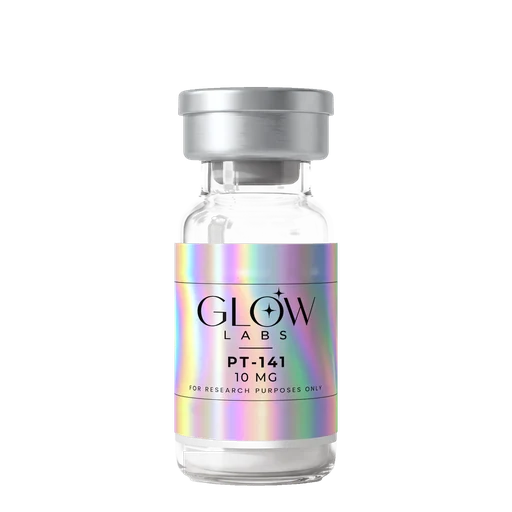
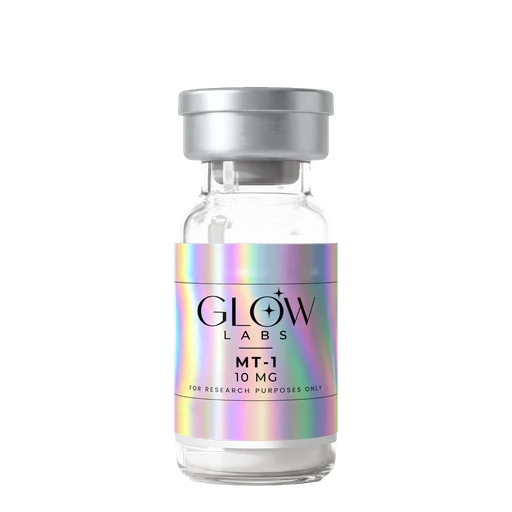
Melanocortin research peptides are lab-made versions of alpha-MSH, a natural hormone that acts on a family of five receptors. This area holds three: PT-141, MT-1 and MT-2. All three aim at the same receptor family, but MT-1 is a straight chain while PT-141 and MT-2 are closed rings.
2 in stock, 1 stocking soon
In this area
The compounds

Plain outer packaging on every order.
Orders leave Traralgon in the afternoon during business hours, then travel tracked to your door.
Certificates of analysis available on request.
If a vial arrives damaged, broken or not what you ordered, message us within 7 days with a photo and we'll replace it free.
Background
About this area
What melanocortin research covers
The melanocortin system is a set of five receptors, the peptides that switch them on, and two natural blockers called agouti and agouti-related protein. The switching peptides, including alpha-MSH, are cut from one large precursor protein called POMC.
A 2006 review in Endocrine Reviews lists the jobs this system handles. They include skin pigment, steroid production in the adrenal gland, energy balance, sodium handling, sexual responses and some gland secretions. Each receptor sits in a few specific places, which has helped researchers study them one at a time.
Sources: Cone RD, Studies on the physiological functions of the melanocortin system, Endocr Rev, 2006.
How PT-141, MT-1 and MT-2 differ
Shape is the main dividing line in this group.
- MT-1: afamelanotide, a straight 13 residue chain. It is alpha-MSH with two changes: norleucine replaces methionine at position 4, and the phenylalanine at position 7 is switched to its mirror image D form.
- MT-2: melanotan II, a seven residue peptide whose last six residues form a ring, closed by a lactam bridge that links aspartic acid to lysine.
- PT-141: bremelanotide, a ring very close to MT-2. PubChem gives the two almost the same formula: C50H68N14O10 for PT-141 and C50H69N15O9 for MT-2. The gap comes from the end of the chain, where PT-141 has an acid group and MT-2 has an amide.
Because the two rings weigh almost the same, telling them apart needs a precise mass check. KPV, covered on our repair research page, is a smaller relative: the last three residues of alpha-MSH. A 2008 mouse study even tested it in animals without a working MC1 receptor.
Our guides cover what PT-141 is and how Melanotan 1 and 2 differ.
Sources: PubChem compound record: Afamelanotide (CID 16197727), US National Library of Medicine. Dorr RT et al, Evaluation of melanotan-II, a superpotent cyclic melanotropic peptide in a pilot phase-I clinical study, Life Sci, 1996. PubChem compound record: Melanotan II (CID 92432), US National Library of Medicine. PubChem compound record: Bremelanotide (CID 9941379), US National Library of Medicine. PubChem compound record: Lys-Pro-Val (alpha-MSH 11-13) (CID 125672), US National Library of Medicine. Kannengiesser K et al, Melanocortin-derived tripeptide KPV has anti-inflammatory potential in murine models of inflammatory bowel disease, Inflamm Bowel Dis, 2008.
What the studies examined
Afamelanotide was tested in two 2015 trials in people with erythropoietic protoporphyria, a rare disorder that makes sunlight painful. Patients received small implants placed under the skin, and the trials counted hours of direct sunlight without pain and the number of phototoxic reactions.
Bremelanotide went through two identical phase 3 trials called RECONNECT, published in 2019. They enrolled 1,267 premenopausal women with hypoactive sexual desire disorder, a condition of ongoing low desire, for 24 weeks.
Human data on Melanotan II come from a few small studies published from 1996 to 2000, starting with a 1996 pilot in three healthy men. It never went on to approval.
Sources: Langendonk JG et al, Afamelanotide for erythropoietic protoporphyria, N Engl J Med, 2015. Kingsberg SA et al, Bremelanotide for the treatment of hypoactive sexual desire disorder: two randomized phase 3 trials, Obstet Gynecol, 2019. Dorr RT et al, Evaluation of melanotan-II, a superpotent cyclic melanotropic peptide in a pilot phase-I clinical study, Life Sci, 1996. Wessells H et al, Synthetic melanotropic peptide initiates erections in men with psychogenic erectile dysfunction: double-blind, placebo controlled crossover study, J Urol, 1998. Wessells H et al, Urology, 2000.
Approved medicines versus tanning products
Two of the three compounds have reached the US market as finished medicines, each for one narrow condition. One is an afamelanotide implant and the other a bremelanotide product. Those approvals cover only the finished medicines, never research powders. In Australia, afamelanotide is registered as SCENESSE, a prescription-only implant for adults with EPP.
Melanotan sold online for tanning is a different story. A 2017 review in the International Journal of Dermatology calls these products untested and likely risky. It points to open questions about how they are made and used. It also cites four case reports describing melanoma in existing moles during or soon after melanotan use, while noting that firm proof of a link is lacking. TGA laboratory checks on Melanotan II sprays seized in 2026 found that bottles carrying one label held very different amounts of peptide.
Sources: Clinuvel, SCENESSE (afamelanotide) implant US prescribing information, DailyMed, US National Library of Medicine. Cosette Pharmaceuticals, VYLEESI (bremelanotide) US prescribing information, DailyMed, US National Library of Medicine. Clinuvel Pharmaceuticals, Australian TGA approves SCENESSE, Company release, 27 October 2020. Habbema L et al, Risks of unregulated use of alpha-melanocyte-stimulating hormone analogues: a review, Int J Dermatol, 2017. Paurobally D et al, Melanotan-associated melanoma, Br J Dermatol, 2011. Therapeutic Goods Administration, Safety alert: Melanotan II tanning peptide products, 2026.
Regulatory status in Australia
The TGA has warned the public not to use tanning products containing melanotan. It also states that Melanotan II is a prescription-only medicine here, and that the Australian Register of Therapeutic Goods lists no product containing it.
Glow Labs supplies PT-141, MT-1 and MT-2 for laboratory research only. They are never sold as tanning products or for any personal use.
Sources: Therapeutic Goods Administration, Don't risk using tanning products containing melanotan, TGA blog. Therapeutic Goods Administration, Safety alert: Melanotan II tanning peptide products, 2026.
FAQ
Your questions
How do melanotan 1 and 2 differ?
Mostly shape and history. Melanotan 1, or afamelanotide, is a straight 13 residue chain that became an approved implant for one rare disorder. Melanotan 2 is a smaller ring that was never approved. The full comparison covers both.
Is PT-141 the same as bremelanotide?
Yes. PT-141 is another name for bremelanotide in PubChem. It is a ring peptide closely related to melanotan II.
Are melanotan peptides legal in Australia?
The TGA classes Melanotan II as a prescription-only medicine, lists no approved product containing it and warns against melanotan tanning products. Afamelanotide is a different case: Clinuvel's product SCENESSE is on the Australian Register of Therapeutic Goods as a prescription medicine.
How is KPV related to these peptides?
KPV matches the last three residues of alpha-MSH, the hormone that all three of these peptides are based on. It is studied in gut inflammation models, so it sits on our repair research page instead.
Sources: PubChem compound record: Afamelanotide (CID 16197727), US National Library of Medicine. Langendonk JG et al, Afamelanotide for erythropoietic protoporphyria, N Engl J Med, 2015. Dorr RT et al, Evaluation of melanotan-II, a superpotent cyclic melanotropic peptide in a pilot phase-I clinical study, Life Sci, 1996. PubChem compound record: Bremelanotide (CID 9941379), US National Library of Medicine. Therapeutic Goods Administration, Safety alert: Melanotan II tanning peptide products, 2026. Therapeutic Goods Administration, Don't risk using tanning products containing melanotan, TGA blog. Clinuvel Pharmaceuticals, Australian TGA approves SCENESSE, Company release, 27 October 2020. PubChem compound record: Lys-Pro-Val (alpha-MSH 11-13) (CID 125672), US National Library of Medicine.
Explore
Other areas
Not sure which compound fits your research?
Ask on WhatsApp