
Research area
Cognitive Research Peptides
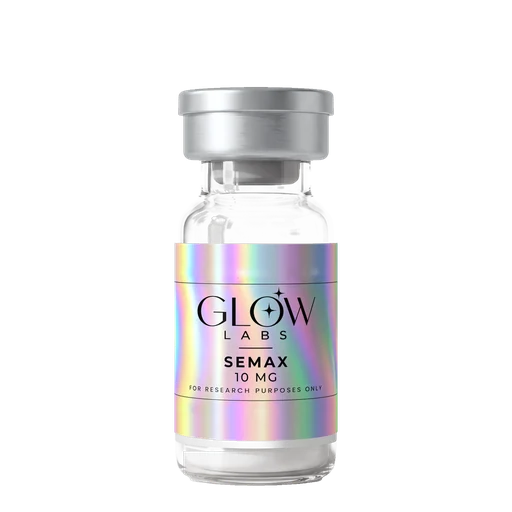
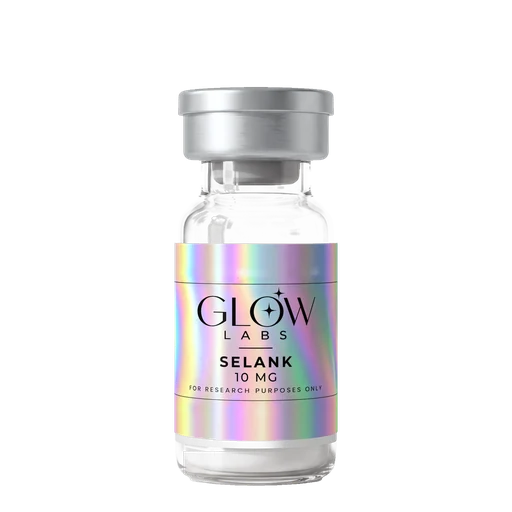
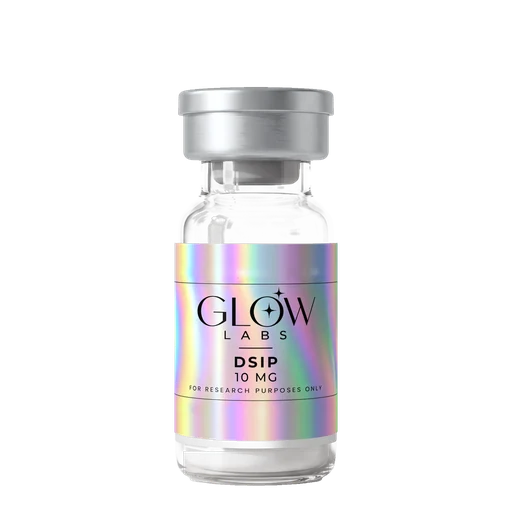
Cognitive research peptides are short peptides that scientists study in brain and nerve research, mostly in rats. This area holds three: Semax, Selank and DSIP. Semax and Selank share the same three residue tail, while DSIP stands apart as a peptide with no known gene or receptor.
1 in stock, 2 stocking soon
In this area
The compounds
Plain outer packaging on every order.
Orders leave Traralgon in the afternoon during business hours, then travel tracked to your door.
Certificates of analysis available on request.
If a vial arrives damaged, broken or not what you ordered, message us within 7 days with a photo and we'll replace it free.
Background
About this area
What cognitive research covers
Brain research on small peptides rarely measures thinking directly. Instead, studies track markers that can be counted in the lab. One example is the level of BDNF, a growth factor for nerve cells. Others are changes in gene activity in one brain region, and brain wave patterns recorded during sleep.
Those markers are useful, but they are a step removed from behaviour in people. The main experiments described on this page were done in rats or rabbits, so the findings describe animal biology.
Sources: Dolotov OV et al, Brain Res, 2006. Volkova A et al, Selank administration affects the expression of some genes involved in GABAergic neurotransmission, Front Pharmacol, 2016. Schoenenberger GA, Monnier M, Characterization of a delta-electroencephalogram (-sleep)-inducing peptide, Proc Natl Acad Sci USA, 1977.
How the three peptides differ
Two of these peptides are built the same way, with a natural fragment at the front and a short proline rich tail at the back. The third has no family at all.
- Semax: the ACTH(4-7) fragment Met-Glu-His-Phe joined to Pro-Gly-Pro, seven residues in all (MEHFPGP). ACTH is a pituitary hormone.
- Selank: tuftsin, the immune peptide Thr-Lys-Pro-Arg, joined to the same Pro-Gly-Pro tail (TKPRPGP).
- DSIP: delta sleep-inducing peptide, a nine residue chain isolated in 1977. A 2006 review notes that its structure matches no other known peptide family.
The shared tail belongs to a group of short sequences sometimes called glyprolines. One Russian study compared glyprolines, Semax and Selank side by side in work on blood clotting. For identity checks, mass separates the pair quickly: PubChem lists Semax near 814 g/mol and Selank near 752 g/mol.
Sources: PubChem compound record: ACTH (4-7), Pro-Gly-Pro- (Semax) (CID 9811102), US National Library of Medicine. PubChem compound record: Selank (CID 11765600), US National Library of Medicine. PubChem compound record: Delta Sleep-Inducing Peptide (emideltide) (CID 68816), US National Library of Medicine. Kovalzon VM, Strekalova TV, Delta sleep-inducing peptide (DSIP): a still unresolved riddle, J Neurochem, 2006. Liapina LA et al, Izv Akad Nauk Ser Biol, 2006.
What the studies examined
A 2006 study in Brain Research gave Semax to rats. It measured BDNF and its receptor, trkB, in the hippocampus, a brain area tied to memory. A 2014 genome-wide study gave Semax to rats after an induced stroke and found shifts in immune and blood vessel genes.
For Selank, a 2016 paper measured 84 nerve signalling genes in the frontal cortex of rats given either Selank or GABA. It used GABA as the comparison compound. A 2019 rat study then tested Selank in a model where ethanol disrupts memory.
DSIP was first found in rabbit brain blood by a team in Basel in 1977. It was named for the delta brain waves it was linked to in those rabbits. A 2006 review calls it a still unresolved riddle. No gene, precursor protein or receptor has been found, and the original link to sleep was never firmly shown.
Read more in our guides to what Semax is and how Selank and Semax compare.
Sources: Dolotov OV et al, Brain Res, 2006. Medvedeva EV et al, BMC Genomics, 2014. Volkova A et al, Selank administration affects the expression of some genes involved in GABAergic neurotransmission, Front Pharmacol, 2016. Kolik LG et al, Bull Exp Biol Med, 2019. Schoenenberger GA, Monnier M, Characterization of a delta-electroencephalogram (-sleep)-inducing peptide, Proc Natl Acad Sci USA, 1977. Kovalzon VM, Strekalova TV, Delta sleep-inducing peptide (DSIP): a still unresolved riddle, J Neurochem, 2006.
Reading this research with care
Three cautions apply to the whole area. First, nearly all of the data are from animals. Second, many of the papers come from a small number of research groups, so independent repeats are scarce. Third, a change in a marker such as BDNF is not the same as a change in memory or mood.
That is why we describe these peptides by what was measured, not by what they might do. A lab that needs to compare two of them should check identity first, because Semax and Selank differ only in their front halves.
Sources: Dolotov OV et al, Brain Res, 2006. Kovalzon VM, Strekalova TV, Delta sleep-inducing peptide (DSIP): a still unresolved riddle, J Neurochem, 2006. PubChem compound record: ACTH (4-7), Pro-Gly-Pro- (Semax) (CID 9811102), US National Library of Medicine. PubChem compound record: Selank (CID 11765600), US National Library of Medicine.
Research use only in Australia
Glow Labs supplies Semax, Selank and DSIP in Australia as dry research powders for laboratory study only. They are not sold as nasal sprays, supplements or medicines, and nothing on this page describes a use beyond the lab. Our research use notice sets out what research use only means.
FAQ
Your questions
What is Semax?
Semax is a seven residue peptide, MEHFPGP. PubChem files it as ACTH (4-7), Pro-Gly-Pro-, a piece of the pituitary hormone ACTH with a short tail added. A 2006 rat paper describes it as an ACTH analog and tracked its effect on BDNF in the hippocampus. More in our guide to what Semax is.
How is Selank different from Semax?
They share the same Pro-Gly-Pro tail but have different front halves. Semax starts with a fragment of the hormone ACTH, while Selank starts with tuftsin, a peptide from the immune system. Our Selank vs Semax guide goes further.
What has Semax been studied for?
Mostly rat brain biology. Studies have measured BDNF and its receptor in the hippocampus, and gene activity after an experimental stroke. None of these papers tested a use in people.
What does DSIP stand for?
Delta sleep-inducing peptide. It was named in 1977 after the delta brain waves recorded in rabbits. A 2006 review says its link to sleep was never firmly shown.
Sources: PubChem compound record: ACTH (4-7), Pro-Gly-Pro- (Semax) (CID 9811102), US National Library of Medicine. Dolotov OV et al, Brain Res, 2006. Medvedeva EV et al, BMC Genomics, 2014. PubChem compound record: Selank (CID 11765600), US National Library of Medicine. Schoenenberger GA, Monnier M, Characterization of a delta-electroencephalogram (-sleep)-inducing peptide, Proc Natl Acad Sci USA, 1977. Kovalzon VM, Strekalova TV, Delta sleep-inducing peptide (DSIP): a still unresolved riddle, J Neurochem, 2006.
Explore
Other areas
Not sure which compound fits your research?
Ask on WhatsApp