BPC-157 in brief
A peptide is a short string of amino acids, the units proteins are built from. BPC-157 is a "pentadecapeptide", which simply means a chain of fifteen. It was first described by a research group in Croatia in the early 1990s, and that group has written much of the literature since.
Researchers became interested in it because, in rodents, it seemed stable in stomach acid and showed protective effects on the gut lining. Work then spread to tendon, muscle, bone and other tissues, again mostly in rats.
Sources: Józwiak M et al, Multifunctionality and possible medical application of the BPC 157 peptide: literature and patent review, Pharmaceuticals (Basel), 2025. Gwyer D et al, Cell Tissue Res, 2019. Seiwerth S et al, Front Pharmacol, 2021.
Questions about this guide?
Ask on WhatsAppThe molecule
BPC-157 is sold as a white freeze-dried powder. Its basic chemistry is well recorded.
| Property | Value |
|---|---|
| Length | 15 amino acids |
| Sequence (one letter code) | GEPPPGKPADDAGLV |
| Molecular formula | C62H98N16O22 |
| Molecular weight | 1419.5 g/mol |
| Other names | Bepecin, PL14736, PLD-116 |
| PubChem CID | 9941957 |
Sport Integrity Australia lists these other names for the compound.
Sources: PubChem compound record CID 9941957 (BPC-157), US National Library of Medicine. Sport Integrity Australia, BPC-157 substance education page.
What was studied
The table below sorts the BPC-157 record by the type of study. This matters because a finding in a rat does not tell us what happens in a person.
| Study type | What exists | Example |
|---|---|---|
| Cell studies | lab work on blood vessel cells and growth factor signals | covered in the 2025 literature review |
| Animal studies | most of the literature, mainly rats: tendon, ligament, muscle, bone, gut and skin wounds | 35 of 36 studies in a 2025 systematic review were preclinical |
| Human reports | three small reports, none controlled | a 2021 knee pain chart review, a 2024 bladder pain pilot and a 2025 safety pilot |
| Controlled human trials | none completed and published | not found in the 2025 reviews |
Animal and lab work
Reviews from 2019 and 2021 summarise rat studies on cut tendons, torn muscle and skin wounds, where treated animals often scored better on tissue measures than untreated ones. A 2025 systematic review screened 544 records from 1993 to 2024 and kept 36 studies. Only one of those involved people. Its search ended in June 2024, before the two later pilots below.
The human record
Only three small human reports have been published, none of them controlled: a 2021 knee pain chart review of 16 patients, a 2024 bladder pain pilot of 12 people and a 2025 safety pilot in two adults.
The 2021 review came from one US clinic. Staff phoned patients who had been given BPC-157, some with thymosin beta-4, and asked about their knees. No standard tool was used to measure change. Reviewers class this kind of report as very low level evidence.
Sources: Józwiak M et al, Multifunctionality and possible medical application of the BPC 157 peptide: literature and patent review, Pharmaceuticals (Basel), 2025. Vasireddi N et al, Emerging use of BPC-157 in orthopaedic sports medicine: a systematic review, HSS J, 2025. McGuire FP et al, Curr Rev Musculoskelet Med, 2025. Gwyer D et al, Cell Tissue Res, 2019. Seiwerth S et al, Front Pharmacol, 2021. Lee E, Padgett B, Altern Ther Health Med, 2021.
How it may act
Researchers have put forward several ideas, all drawn from animal and cell work. The most common is that BPC-157 affects signals that guide new blood vessel growth, including the VEGF pathway and nitric oxide. Others suggest it changes how cells respond to growth hormone or to inflammation.
These are hypotheses. None has been confirmed in people. A 2019 review also noted that only a handful of research groups have studied the peptide in depth.
Sources: Józwiak M et al, Multifunctionality and possible medical application of the BPC 157 peptide: literature and patent review, Pharmaceuticals (Basel), 2025. Vasireddi N et al, Emerging use of BPC-157 in orthopaedic sports medicine: a systematic review, HSS J, 2025. McGuire FP et al, Curr Rev Musculoskelet Med, 2025. Gwyer D et al, Cell Tissue Res, 2019.
Still unknown
A great deal. A 2025 narrative review called "Regeneration or Risk?" points to these gaps:
- no completed, controlled trials in people
- very limited safety data in people
- a possible bias toward publishing only positive findings
A 2025 systematic review found no clinical safety data at all. It added that harm could come from unregulated manufacturing or contamination.
Sport Integrity Australia states plainly that its safety in people is unknown. Questions about the liver, heart or anything else in humans cannot be settled from the current record.
Sources: Vasireddi N et al, Emerging use of BPC-157 in orthopaedic sports medicine: a systematic review, HSS J, 2025. McGuire FP et al, Curr Rev Musculoskelet Med, 2025. Sport Integrity Australia, BPC-157 substance education page.
Status in Australia
Sport Integrity Australia notes that BPC-157 has no entry on the Australian Register of Therapeutic Goods. In 2026 the TGA named BPC-157 in warnings about unapproved peptide products, and it has acted against sellers. In the TGA's view, a lab only disclaimer on a vial is not enough, by itself, to make its sale legal.
In sport, BPC-157 sits in class S0, Non-Approved Substances, on the World Anti-Doping Code list. It is prohibited at all times, in and out of competition.
Glow Labs posts orders Australia wide, tracked, with delivery in 2-3 days.
Sources: Sport Integrity Australia, BPC-157 substance education page. Therapeutic Goods Administration, Understanding your responsibilities when importing, compounding and supplying unapproved peptide products, Safety advisory, 13 April 2026. Therapeutic Goods Administration, TGA flexes its muscle against illegal peptides and steroids, Media release, 17 August 2026.
BPC-157 and TB-500
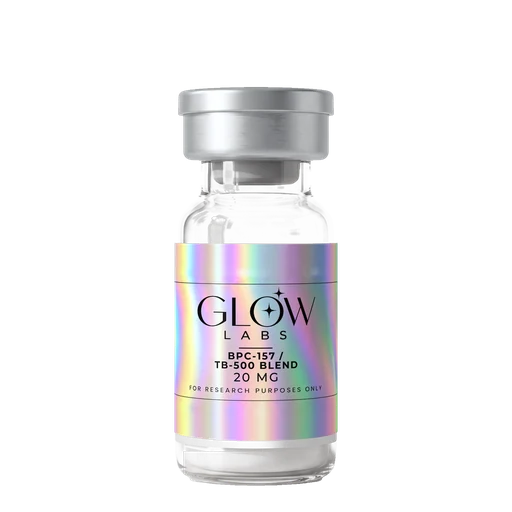
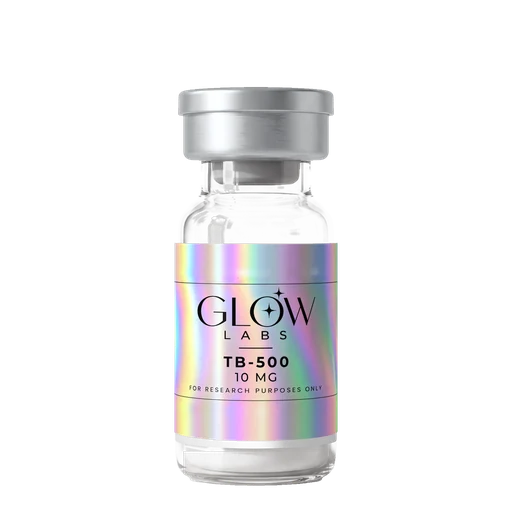
BPC-157 is often named next to TB-500, a short fragment of the protein thymosin beta-4. The two have different origins and very different structures. Our guide on how BPC-157 and TB-500 differ sets them side by side, and our catalogue carries a combined BPC-157 and TB-500 vial for studies of both. TB-500 vials are listed on the TB-500 page.
Research use only
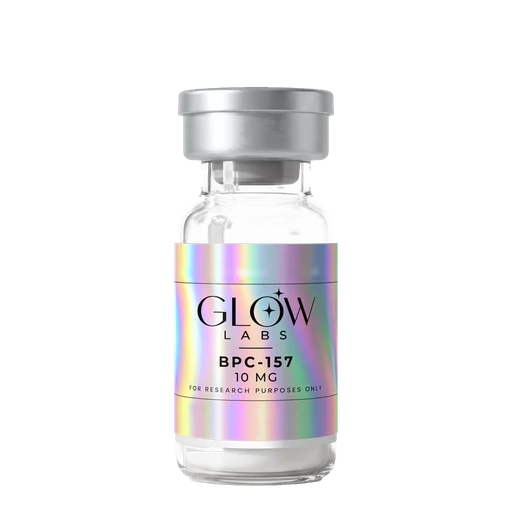
Our BPC-157 research vials are supplied as lyophilised powder for lab research only. They are not medicine and are not for people or animals. For how Glow Labs sells its compounds, see our research use only notice. Read how to store peptides before opening a vial.
FAQ
Is BPC-157 approved in Australia?
No. BPC-157 has no entry on the Australian Register of Therapeutic Goods, and the TGA named it in its 2026 warnings on unapproved peptides.
Is BPC-157 banned in sport?
Yes. It is listed under S0, Non-Approved Substances, and is prohibited at all times for athletes covered by the anti-doping code.
Has BPC-157 been studied in people?
Barely. A 2025 narrative review counted three small human reports, and none had a control group. No controlled trial has been published.
Sources: Vasireddi N et al, Emerging use of BPC-157 in orthopaedic sports medicine: a systematic review, HSS J, 2025. McGuire FP et al, Curr Rev Musculoskelet Med, 2025. Sport Integrity Australia, BPC-157 substance education page. Therapeutic Goods Administration, Understanding your responsibilities when importing, compounding and supplying unapproved peptide products, Safety advisory, 13 April 2026.
Sources
- PubChem compound record CID 9941957 (BPC-157), US National Library of Medicine.
- Józwiak M et al, Multifunctionality and possible medical application of the BPC 157 peptide: literature and patent review, Pharmaceuticals (Basel), 2025.
- Vasireddi N et al, Emerging use of BPC-157 in orthopaedic sports medicine: a systematic review, HSS J, 2025.
- McGuire FP et al, Curr Rev Musculoskelet Med, 2025.
- Gwyer D et al, Cell Tissue Res, 2019.
- Seiwerth S et al, Front Pharmacol, 2021.
- Lee E, Padgett B, Altern Ther Health Med, 2021.
- Sport Integrity Australia, BPC-157 substance education page.
- Therapeutic Goods Administration, Understanding your responsibilities when importing, compounding and supplying unapproved peptide products, Safety advisory, 13 April 2026.
- Therapeutic Goods Administration, TGA flexes its muscle against illegal peptides and steroids, Media release, 17 August 2026.