TB 500 in brief
The name TB-500 surfaced in horse racing, on a veterinary product. In 2012 a Belgian doping lab analysed it and found the key ingredient was a fragment called Ac-LKKTETQ. That is amino acids 17 to 23 of thymosin beta-4, the part of the protein tied to binding actin.
In the products two doping labs analysed in 2012, TB-500 was this small fragment. Some sellers and websites still use the name for the whole protein, which causes real confusion.
Sources: Esposito S et al, Drug Test Anal, 2012. Ho EN et al, J Chromatogr A, 2012.
Questions about this guide?
Ask on WhatsAppThe parent protein
Thymosin beta-4 is a natural protein of 43 amino acids. Its best known job inside cells is to hold on to actin, a protein that forms part of the cell's internal frame. By holding single actin units, it helps control when and where that frame is built, which matters for how cells change shape and move.
A 2024 review traced where thymosin beta-4 shows up during human development and found it in a wide range of organs. Reviews from 2003 and 2007 describe its actin binding in detail and note that it also seems to act outside cells, which is less well understood.
Sources: Sun HQ et al, The beta-thymosin enigma, Ann N Y Acad Sci, 2007. Bubb MR, Thymosin beta 4 interactions, Vitam Horm, 2003. Faa G et al, Thymosin beta-4 and beta-10 expression in human organs during development: a review, Cells, 2024.
Two molecules
This table shows why it matters which molecule a "TB-500" label refers to. The two differ more than five times over in mass.
| Feature | TB-500 fragment | Full thymosin beta-4 |
|---|---|---|
| Length | 7 amino acids | 43 amino acids |
| Sequence | Ac-Leu-Lys-Lys-Thr-Glu-Thr-Gln | full protein chain |
| Formula | C38H68N10O14 | C212H350N56O78S |
| Molecular weight | 889.0 g/mol | about 4,963 g/mol |
| PubChem CID | 62707662 | 45382195 |
| Found in doping lab tests | yes, in products sold as TB-500 | the natural protein, present in the body |
A certificate of analysis that reports a mass near 889 points to the fragment. A mass near 4,963 points to the whole protein.
Sources: PubChem compound record CID 62707662 (TB-500, Ac-LKKTETQ), US National Library of Medicine. PubChem compound record CID 45382195 (thymosin beta-4), US National Library of Medicine. Esposito S et al, Drug Test Anal, 2012.
What was studied
The full protein
Most of the science is about thymosin beta-4 itself, not TB-500. Cell and animal studies have looked at it in skin wounds, the heart after injury and the eye. Sport Integrity Australia notes that the 43 amino acid protein has also been tested in some clinical trials.
The fragment
Work on the fragment is mostly analytical. Papers from 2012 and 2024 built methods to detect TB-500 and its breakdown products in horse samples and in rats. This is how sports testers find it.
A 2026 rat study compared BPC-157, TB-500 and the two together after Achilles tendon surgery, with eight rats per group. It is one of very few studies to give the fragment itself to animals. The authors called it exploratory.
A 2026 review of peptides used in sport found the evidence in people to be thin.
Sources: Ho EN et al, J Chromatogr A, 2012. Rahaman KA et al, J Chromatogr B, 2024. Sun HQ et al, The beta-thymosin enigma, Ann N Y Acad Sci, 2007. Mendias CL et al, Safety and efficacy of approved and unapproved peptide therapies for musculoskeletal injuries and athletic performance, Sports Med, 2026. Sport Integrity Australia, Thymosin beta-4, Substance education page, version of 14 September 2026. Biçer O et al, Jt Dis Relat Surg, 2026.
How it may work
The leading idea is that the fragment keeps the actin binding part of the parent protein. If so, it might affect how cells move and how new blood vessels form, which is what the full protein seems to do in lab models.
That is an assumption carried over from the larger molecule. Few studies have tested whether seven amino acids behave like 43.
Sources: Sun HQ et al, The beta-thymosin enigma, Ann N Y Acad Sci, 2007. Bubb MR, Thymosin beta 4 interactions, Vitam Horm, 2003.
Concerns and gaps
Sport Integrity Australia says thymosin beta-4 is not approved for use in people anywhere in the world. It also raises a serious concern that the protein increases the growth and spread of cancer cells. The reason given is that the protein helps cells grow and live longer, and it does not pick which cells it helps.
Other gaps:
- no published controlled human trials of the fragment
- no long term safety data
- products bought online may not contain what the label says
Sources: Mendias CL et al, Safety and efficacy of approved and unapproved peptide therapies for musculoskeletal injuries and athletic performance, Sports Med, 2026. Sport Integrity Australia, Thymosin beta-4, Substance education page, version of 14 September 2026.
Status in Australia
Sport Integrity Australia says thymosin beta-4, also known as TB-500, is not approved by the TGA. The TGA named TB-500 in its April 2026 safety alert on unapproved peptides. That alert says a "research use only" disclaimer does not make supply lawful. Its August 2026 media release described seizures from a seller. Glow Labs sells TB-500 under its research use only notice.
The October 2026 Poisons Standard puts TB-500 and thymosin beta-4 in Schedule 4 and lists both in Appendix D, clause 5, the group nobody may hold without legal authority.
In sport, it falls under S2 of the WADA Prohibited List, in the growth factors group, and is banned at all times.
Sources: Sport Integrity Australia, Thymosin beta-4, Substance education page, version of 14 September 2026. Therapeutic Goods Administration, Understanding your responsibilities when importing, compounding and supplying unapproved peptide products, Safety advisory, 13 April 2026. Therapeutic Goods Administration, TGA flexes its muscle against illegal peptides and steroids, Media release, 17 August 2026. Therapeutic Goods (Poisons Standard, October 2026) Instrument 2026 (F2026L01327), Federal Register of Legislation.
TB 500 and BPC-157
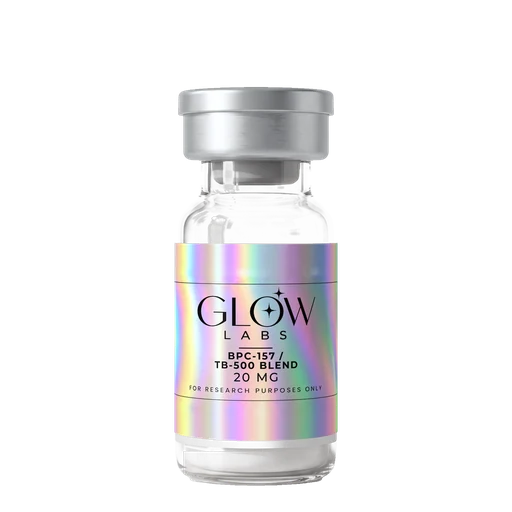
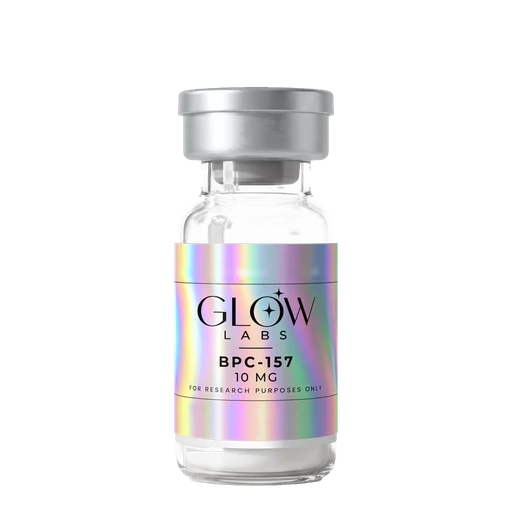
TB-500 is often paired with BPC-157, a 15 amino acid peptide drawn from a stomach protein. The two are unrelated chemically. Read what BPC-157 is, or see our side by side guide on how TB-500 and BPC-157 differ. Labs can order BPC-157 vials or the BPC-157 and TB-500 blend.
Sources: PubChem compound record CID 62707662 (TB-500, Ac-LKKTETQ), US National Library of Medicine. PubChem compound record CID 9941957 (BPC-157), US National Library of Medicine. Józwiak M et al, Multifunctionality and possible medical application of the BPC 157 peptide: literature and patent review, Pharmaceuticals (Basel), 2025.
Research use only
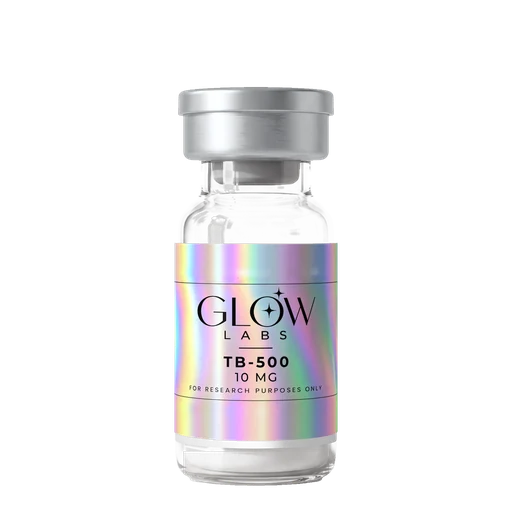
Our TB-500 research vials hold the Ac-LKKTETQ fragment as lyophilised powder. They are sold for lab research only, never for people or animals.
FAQ
Is TB-500 the same as thymosin beta-4?
Not in the products doping labs have tested. There, TB-500 was a seven amino acid fragment of thymosin beta-4. The full protein is 43 amino acids long and weighs over five times as much.
Is TB-500 approved in Australia?
No. Sport Integrity Australia says it is not approved by the TGA, and the TGA named it in its 2026 alert on unapproved peptides.
Is TB 500 legal in Australia?
Not for anyone without legal authority to hold it. The current Poisons Standard puts TB-500 on Schedule 4 and also names it in Appendix D, clause 5, and Sport Integrity Australia says the TGA has not approved it. This is general information, not legal advice.
Is TB-500 banned in sport?
Yes. It is prohibited at all times under S2 of the WADA list, and doping labs have published methods to detect it.
Why is it linked to horse racing?
The name surfaced on veterinary products. Early detection work was done on horse urine and plasma for racing control.
Sources: PubChem compound record CID 62707662 (TB-500, Ac-LKKTETQ), US National Library of Medicine. Esposito S et al, Drug Test Anal, 2012. Ho EN et al, J Chromatogr A, 2012. Sport Integrity Australia, Thymosin beta-4, Substance education page, version of 14 September 2026. Therapeutic Goods Administration, Understanding your responsibilities when importing, compounding and supplying unapproved peptide products, Safety advisory, 13 April 2026. Therapeutic Goods (Poisons Standard, October 2026) Instrument 2026 (F2026L01327), Federal Register of Legislation.
Sources
- PubChem compound record CID 62707662 (TB-500, Ac-LKKTETQ), US National Library of Medicine.
- PubChem compound record CID 45382195 (thymosin beta-4), US National Library of Medicine.
- Esposito S et al, Drug Test Anal, 2012.
- Ho EN et al, J Chromatogr A, 2012.
- Rahaman KA et al, J Chromatogr B, 2024.
- Sun HQ et al, The beta-thymosin enigma, Ann N Y Acad Sci, 2007.
- Bubb MR, Thymosin beta 4 interactions, Vitam Horm, 2003.
- Faa G et al, Thymosin beta-4 and beta-10 expression in human organs during development: a review, Cells, 2024.
- Mendias CL et al, Safety and efficacy of approved and unapproved peptide therapies for musculoskeletal injuries and athletic performance, Sports Med, 2026.
- Sport Integrity Australia, Thymosin beta-4, Substance education page, version of 14 September 2026.
- Therapeutic Goods Administration, Understanding your responsibilities when importing, compounding and supplying unapproved peptide products, Safety advisory, 13 April 2026.
- Therapeutic Goods Administration, TGA flexes its muscle against illegal peptides and steroids, Media release, 17 August 2026.
- Biçer O et al, Jt Dis Relat Surg, 2026.
- Therapeutic Goods (Poisons Standard, October 2026) Instrument 2026 (F2026L01327), Federal Register of Legislation.
- PubChem compound record CID 9941957 (BPC-157), US National Library of Medicine.
- Józwiak M et al, Multifunctionality and possible medical application of the BPC 157 peptide: literature and patent review, Pharmaceuticals (Basel), 2025.