
Research area
Metabolic Research Peptides
Metabolic research peptides are lab compounds used to study how the body handles sugar, fat and energy. We group three here: retatrutide, tirzepatide and 5-Amino-1MQ. The first two are long peptides modelled on gut hormones, and the third is a small molecule that blocks an enzyme inside cells.
3 in stock, 1 stocking soon
In this area
The compounds
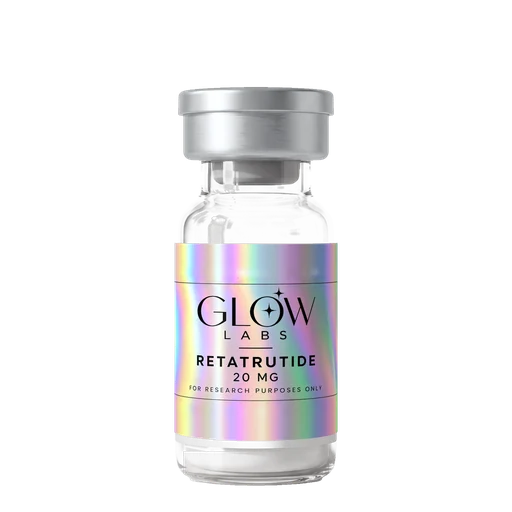
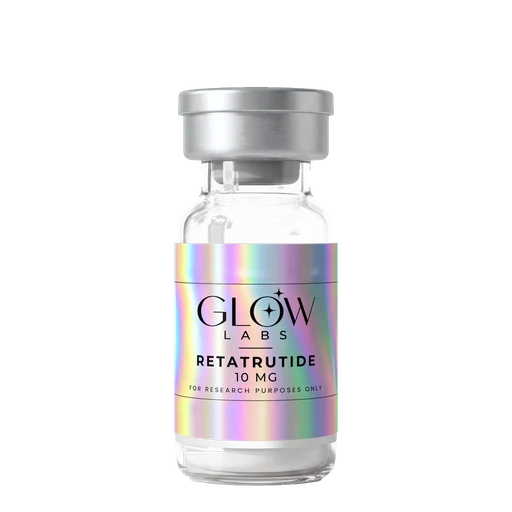
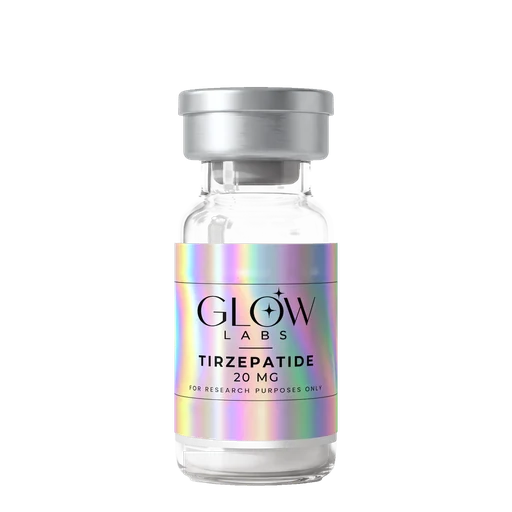
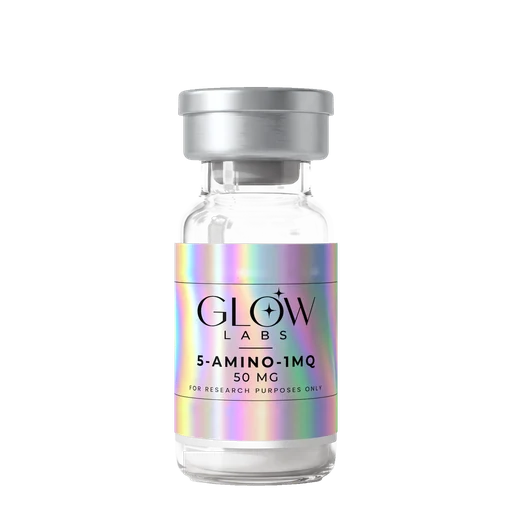
Plain outer packaging on every order.
Orders leave Traralgon in the afternoon during business hours, then travel tracked to your door.
Certificates of analysis available on request.
If a vial arrives damaged, broken or not what you ordered, message us within 7 days with a photo and we'll replace it free.
Background
About this area
What metabolic research covers
After a meal, cells lining the gut release hormones that tell the rest of the body food has arrived. The best known is GLP-1. A 2018 review in Cell Metabolism explains what it does. It raises insulin release, holds back glucagon, slows how fast the stomach empties and is linked to lower food intake.
GIP, short for glucose-dependent insulinotropic polypeptide, is a second gut hormone of this kind. Glucagon comes from the pancreas and pulls the other way, raising blood sugar between meals. For years drug chemists have built lab-made peptides that outlast these short-lived natural signals.
The same review describes a newer idea: one molecule designed to switch on more than one of these receptors. A separate strand of metabolic research skips hormones entirely and looks at enzymes inside the cell that control how fuel is stored and burned.
Sources: Drucker DJ, Mechanisms of action and therapeutic application of glucagon-like peptide-1, Cell Metab, 2018. Coskun T et al, Cell Metab, 2022. Neelakantan H et al, Biochem Pharmacol, 2018.
How the three compounds differ
The quickest way to sort them is to count their targets and ask what kind of molecule each one is.
- Tirzepatide: a single long peptide aimed at two receptors, GIP and GLP-1. PubChem puts its mass at roughly 4.8 kilodaltons, so it is one of the largest molecules in our range.
- Retatrutide: a single peptide aimed at three receptors, adding glucagon to the pair above. In its discovery paper, cell tests showed even glucagon and GLP-1 activity with a stronger pull at GIP.
- 5-Amino-1MQ: not a peptide. It is a small charged ring compound, 5-amino-1-methylquinolinium, made as a tool to block an enzyme called NNMT.
So the two peptides differ by one receptor. 5-Amino-1MQ works on a different kind of target altogether, an enzyme floating in the cell fluid rather than a receptor sitting on the cell surface.
Our guides go further on each one: what retatrutide is, tirzepatide and retatrutide side by side, and 5-Amino-1MQ and the NNMT enzyme.
Sources: PubChem compound record: Tirzepatide (CID 166567236), US National Library of Medicine. Coskun T et al, Cell Metab, 2022. PubChem compound record: 5-Amino-1-methylquinolinium (CID 950107), US National Library of Medicine. Neelakantan H et al, Biochem Pharmacol, 2018.
What the published studies examined
Tirzepatide has the longest trial record of the three. SURPASS-1, reported in the Lancet in 2021, ran for 40 weeks in adults with type 2 diabetes. SURMOUNT-1 followed in 2022 and tracked adults with obesity for 72 weeks.
Retatrutide is a few steps behind. Its 2022 discovery paper covered obese mice and a first small safety study in people. In 2023 came two phase 2 trials, one enrolling people with obesity and the other people with type 2 diabetes. TRIUMPH-1, a phase 3 trial, followed in 2026.
5-Amino-1MQ is still at the animal stage. A 2018 paper tested how easily a series of NNMT blockers crossed cell membranes and whether they left related enzymes alone. It then studied one of them in mice on a high fat diet. A 2022 mouse study paired NNMT blocking with a reduced calorie diet and compared the gut bacteria of each group.
Sources: Rosenstock J et al, Lancet, 2021. Jastreboff AM et al, Tirzepatide Once Weekly for the Treatment of Obesity, N Engl J Med, 2022 (SURMOUNT-1). Coskun T et al, Cell Metab, 2022. Jastreboff AM et al, Triple-hormone-receptor agonist retatrutide for obesity: a phase 2 trial, N Engl J Med, 2023. Rosenstock J et al, Lancet, 2023. Jastreboff AM et al, Retatrutide, a Triple Hormone Receptor Agonist, for Treatment of Obesity, N Engl J Med, 2026 (TRIUMPH-1). Neelakantan H et al, Biochem Pharmacol, 2018. Dimet-Wiley A et al, Reduced calorie diet combined with NNMT inhibition establishes a distinct microbiome in DIO mice, Sci Rep, 2022.
Where each one sits on the evidence ladder
Research climbs in steps. Cell tests come first, then animals, then small safety studies in people. Larger phase 2 and phase 3 trials follow, and only after that does a regulator decide. The three compounds in this area stand on very different rungs.
- Tirzepatide has cleared every rung for specific medical uses. It is the active ingredient of a registered medicine, but a research vial is not that medicine.
- Retatrutide has reached phase 3 and remains investigational, with no approval as a medicine.
- 5-Amino-1MQ has published cell and mouse work only. The papers cited here report no completed human trial.
When you read any statement about a metabolic compound, first ask which rung the evidence came from. A finding in mice and a finding in a 72-week human trial carry very different weight.
Sources: Therapeutic Goods Administration, Australian Product Information summary: Mounjaro (AusPMD). Jastreboff AM et al, Retatrutide, a Triple Hormone Receptor Agonist, for Treatment of Obesity, N Engl J Med, 2026 (TRIUMPH-1). Therapeutic Goods Administration, Understanding your responsibilities when importing, compounding and supplying unapproved peptide products, Safety advisory, 13 April 2026. Neelakantan H et al, Biochem Pharmacol, 2018.
Regulatory status in Australia
Retatrutide is one of the compounds the TGA names when it gives examples of unapproved peptide products. Tirzepatide is the opposite case: the TGA has registered it, but only as part of a finished prescription medicine.
Glow Labs lists these compounds for laboratory research only. In its 13 April 2026 advisory, the TGA says a disclaimer that a product is for research use only does not make its supply lawful. On its own, that kind of disclaimer does not change a product's regulatory status or remove advertising or supply obligations.
Sources: Therapeutic Goods Administration, Understanding your responsibilities when importing, compounding and supplying unapproved peptide products, Safety advisory, 13 April 2026. Therapeutic Goods Administration, Australian Product Information summary: Mounjaro (AusPMD).
FAQ
Your questions
How do retatrutide and tirzepatide differ?
Start by counting receptors. Tirzepatide binds the GIP and GLP-1 receptors, which makes it a dual agonist. Retatrutide also binds the glucagon receptor, which makes it a triple agonist. Our comparison guide lays out their structure and trials in more detail.
Has retatrutide been approved?
No. It is still an investigational compound. A phase 3 trial, TRIUMPH-1, was published in 2026, and the TGA lists retatrutide among its examples of unapproved peptide products.
Why is 5-Amino-1MQ grouped with metabolic peptides?
Researchers study it for the same broad question, how cells manage energy. Chemically it is not a peptide, because it has no chain of amino acids. We list it here as a laboratory chemical so it sits beside the compounds it is most often compared with.
Are GLP-1 medicines peptides?
Most of them are. GLP-1 is a natural peptide hormone, and compounds built to copy it, such as tirzepatide, are long synthetic amino acid chains. The 2018 review of GLP-1 biology also describes newer oral agonists and other molecules that act on the same receptor.
Sources: Coskun T et al, Cell Metab, 2022. Rosenstock J et al, Lancet, 2021. Jastreboff AM et al, Retatrutide, a Triple Hormone Receptor Agonist, for Treatment of Obesity, N Engl J Med, 2026 (TRIUMPH-1). Therapeutic Goods Administration, Understanding your responsibilities when importing, compounding and supplying unapproved peptide products, Safety advisory, 13 April 2026. Neelakantan H et al, Biochem Pharmacol, 2018. Drucker DJ, Mechanisms of action and therapeutic application of glucagon-like peptide-1, Cell Metab, 2018.
Explore
Other areas
Not sure which compound fits your research?
Ask on WhatsApp