Storage at a glance
| Form | Where to keep it | Why |
|---|---|---|
| Dry powder, kept for months | Freezer, sealed tight, at about -15 °C or colder | Colder storage slows the slow chemistry that still happens in a dry solid |
| Dry powder, used within weeks | Fridge, at about 4 °C, sealed and dark | Fine for short holding, per peptide supplier guidance |
| Mixed vial (in solution) | Fridge, upright and dark, for short holding. One peptide maker's handling guide prefers frozen portions below -15 °C and advises against long storage in solution | Peptides in water break down much faster than dry powder |
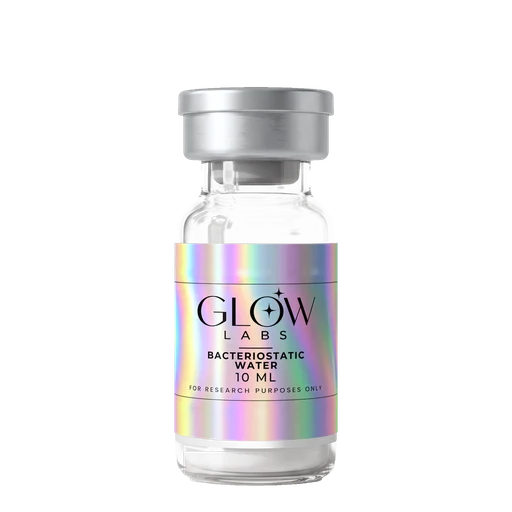
| Bacteriostatic water, unopened | Room temperature, as the label says | The US label lists 20 to 25 °C |
If the vial or its supplier gives a different instruction, follow that. The table is a general rule for research peptides, not a promise for any single compound.
Sources: Lai MC et al, Solid-state chemical stability of proteins and peptides, J Pharm Sci, 1999. Bachem, Handling and storage guidelines for peptides, Knowledge Center. Hospira, Bacteriostatic Water for Injection, USP: product label, DailyMed, US National Library of Medicine.
Questions about this guide?
Ask on WhatsAppWhy they break down
A peptide is a chain of amino acids. Several slow chemical changes can damage that chain over time.
- Water allows hydrolysis, where the chain is cut, and deamidation, where the amino acid asparagine slowly changes into a different form.
- Oxygen oxidises some amino acids, mainly methionine, cysteine and tryptophan.
- Light can start oxidation too. Tryptophan, tyrosine and cysteine are among the amino acids most open to light damage.
- Heat speeds up every one of these reactions.
- Clumping, called aggregation, can happen when peptides unfold, which shaking, freezing and warmth all encourage.
This is why peptides with asparagine, glutamine, methionine, cysteine or tryptophan in their sequence are known to have shorter shelf lives.
Sources: Bachem, Handling and storage guidelines for peptides, Knowledge Center. Geiger T, Clarke S, J Biol Chem, 1987. Manning MC et al, Stability of protein pharmaceuticals: an update, Pharm Res, 2010. Kerwin BA et al, Protect from light: photodegradation and protein biologics, J Pharm Sci, 2007.
Storing the powder
Freeze-dried powder is the most stable form a peptide can take, because most of the water has been removed. It is not frozen in time, though. A 1999 review found that dry peptides can still go through deamidation, chain cutting, oxidation and clumping, and that moisture and temperature drive each of them.
- Keep the vial sealed until you need it.
- Store it in the freezer for long holding, or the fridge for a few weeks.
- Keep it in its box or a dark container.
- Let a cold vial reach room temperature before you open it. Peptide powder readily soaks up water from the air, and a cold vial will gather condensation.
- Close it tightly straight after use.
For more on what the powder is and how it is made, see our guide to lyophilized peptide powder.
Sources: Lai MC et al, Solid-state chemical stability of proteins and peptides, J Pharm Sci, 1999. Bachem, Handling and storage guidelines for peptides, Knowledge Center.
Storing a mixed vial
Once a peptide is dissolved, every breakdown reaction speeds up. A 2023 review of peptide stability in water named pH and buffer choice as the most practical ways that formulators slow this down. Keeping air out was one of the other practical methods it listed. In a research setting you rarely control those, so cold, dark storage does most of the work.
- Keep the mixed vial in the fridge, standing upright.
- Keep it away from light.
- Do not freeze and thaw it repeatedly. Ice forming and melting creates surfaces where proteins and peptides unfold.
- Label it with the compound and the date you mixed it.
A peptide maker's handling guide also advises against long storage in solution and prefers splitting it into frozen portions below -15 °C. If you need to keep material for months, the dry form is the better choice. Our guide on how to reconstitute peptides covers the mixing steps.
Sources: Bachem, Handling and storage guidelines for peptides, Knowledge Center. Nugrahadi PP et al, Designing formulation strategies for enhanced stability of therapeutic peptides in aqueous solutions: a review, Pharmaceutics, 2023. Cao E et al, Effect of freezing and thawing rates on denaturation of proteins in aqueous solutions, Biotechnol Bioeng, 2003.
Fridge shelf life
There is no honest single number. Shelf life depends on the sequence, the liquid, the temperature and how often the vial is opened.
Published stability work is done one molecule at a time. In one example, teriparatide that had been freeze-dried and then dissolved formed visible solids within two to four weeks in some samples, while the same peptide that had never been dried stayed clear for twelve weeks. The difference came from changes during freezing and drying. A day count copied from one peptide will not hold for another.
Sources: Nugrahadi PP et al, Designing formulation strategies for enhanced stability of therapeutic peptides in aqueous solutions: a review, Pharmaceutics, 2023. Merutka G et al, Stability of lyophilized teriparatide, PTH(1-34), after reconstitution, Eur J Pharm Biopharm, 2016.
When it arrives
Each Glow Labs order is posted from our Gippsland base in Victoria with tracking and arrives in 2-3 days. Across the eastern states, a summer parcel can spend part of that time in a hot van or letterbox. Here is what to do in the first hour.
- Bring the parcel inside as soon as you can.
- Unpack it and check that each vial is sealed and labelled.
- Check the powder inside. You want a dry cake or loose powder, not anything damp or shrunken.
- Store the vials cold straight away, in the fridge or freezer, inside a closed box that keeps out light.
A short warm spell matters far less for dry powder than for a solution, because the main breakdown reactions need water. That is the reason research peptides travel dry. Checking the seal on arrival is a sensible habit. Delivery details are on our shipping page.
Sources: Lai MC et al, Solid-state chemical stability of proteins and peptides, J Pharm Sci, 1999. Bachem, Handling and storage guidelines for peptides, Knowledge Center.
Signs of a bad vial
A vial that looks wrong should be set aside, not used in your work. Look for:
- Powder that looks wet, sticky or has shrunk into a small lump
- A colour change from white or off-white
- A mixed solution that is cloudy or hazy
- Specks, threads or flakes floating in the liquid
- A broken seal or a cracked vial
US FDA researchers stored a freeze-dried hormone peptide, secretin, in four different conditions for eight weeks. In warm, humid storage, particles in the mixed samples had grown within the first week. By week eight that powder took more than three times as long to dissolve, and lab tests showed less secretin left in the stored samples. Appearance is a useful first check, but a normal-looking vial does not prove the contents are pure.
Glass or plastic?
Peptides can stick to the walls of their container, which lowers the amount left in solution. One study measured losses of 90 percent or more for some charged peptides held in common glass and plastic tubes. Another found that the best container differs from one peptide to the next. For storage, keep the peptide in the vial it came in rather than moving it into other containers.
Inside the fridge, keep the vials in a closed box. That keeps them dark and stops them rolling around.
Sources: Kristensen K et al, Adsorption of cationic peptides to solid surfaces of glass and plastic, PLoS One, 2015. Goebel-Stengel M et al, The importance of using the optimal plasticware and glassware in studies involving peptides, Anal Biochem, 2011.
FAQ
What happens if peptides are not refrigerated?
Dry powder usually copes with a few days at room temperature, which is why it can travel without cold packing. A mixed vial is more sensitive, and warmth speeds up breakdown. Move both to cold storage as soon as you can.
Can I freeze a mixed vial?
Peptide suppliers note that frozen solutions keep for a few weeks, but each freeze and thaw can damage the peptide. If you freeze a solution, avoid thawing and refreezing it.
Does bacteriostatic water need the fridge?
No. The US product label stores unopened bacteriostatic water at 20 to 25 °C. Our guide to bacteriostatic water vs sterile water explains the label in more detail.
What destroys peptides?
Water, oxygen, light, heat, shaking and repeated freezing and thawing. Each one speeds up a different kind of damage.
How long can you store dry peptides?
For longer holding, dry powder goes in a tightly closed vial in the freezer, at about -15 °C or colder. There is no single time that fits every peptide, because moisture, heat and the sequence all change how fast it wears down, so follow the vial or supplier if they give a date. For only a few weeks, the fridge is fine.
How do you tell if peptides have gone bad?
Set the vial aside if the powder is damp, sticky, shrunken or off colour, if a mixed solution turns cloudy or has specks or threads in it, or if the seal or glass is broken. A normal look is only a first check and is not proof the contents are pure.
Sources: Lai MC et al, Solid-state chemical stability of proteins and peptides, J Pharm Sci, 1999. Bachem, Handling and storage guidelines for peptides, Knowledge Center. Cao E et al, Effect of freezing and thawing rates on denaturation of proteins in aqueous solutions, Biotechnol Bioeng, 2003. Srinivasan C et al, Stability characterization and appearance of particulates in a lyophilized formulation of a model peptide hormone, human secretin, Int J Pharm, 2015. Hospira, Bacteriostatic Water for Injection, USP: product label, DailyMed, US National Library of Medicine.
Sources
- Lai MC et al, Solid-state chemical stability of proteins and peptides, J Pharm Sci, 1999.
- Bachem, Handling and storage guidelines for peptides, Knowledge Center.
- Geiger T, Clarke S, Deamidation, isomerization, and racemization at asparaginyl and aspartyl residues in peptides, Succinimide-linked reactions that contribute to protein degradation, J Biol Chem, 1987.
- Manning MC et al, Stability of protein pharmaceuticals: an update, Pharm Res, 2010.
- Kerwin BA et al, Protect from light: photodegradation and protein biologics, J Pharm Sci, 2007.
- Nugrahadi PP et al, Designing formulation strategies for enhanced stability of therapeutic peptides in aqueous solutions: a review, Pharmaceutics, 2023.
- Cao E et al, Effect of freezing and thawing rates on denaturation of proteins in aqueous solutions, Biotechnol Bioeng, 2003.
- Merutka G et al, Stability of lyophilized teriparatide, PTH(1-34), after reconstitution, Eur J Pharm Biopharm, 2016.
- Srinivasan C et al, Stability characterization and appearance of particulates in a lyophilized formulation of a model peptide hormone, human secretin, Int J Pharm, 2015.
- Kristensen K et al, Adsorption of cationic peptides to solid surfaces of glass and plastic, PLoS One, 2015.
- Goebel-Stengel M et al, The importance of using the optimal plasticware and glassware in studies involving peptides, Anal Biochem, 2011.
- Hospira, Bacteriostatic Water for Injection, USP: product label, DailyMed, US National Library of Medicine.