In plain words
Freeze-drying, or lyophilisation, removes water from a product without boiling it off. The product is frozen first, and then the ice is turned straight into vapour under a vacuum. What is left keeps the shape it had when frozen. That is why the solid at the bottom of a vial often looks like a small, firm puck.
Drug makers use the same method for vaccines, genes and many other delicate products. A 2022 review describes freeze-drying as a way to give these products long-term stability and make them easier to move from place to place.
Questions about this guide?
Ask on WhatsAppHow it is made
Freeze-drying runs in three stages. This table shows what happens inside the vial at each one.
| Stage | What happens | What the vial holds |
|---|---|---|
| 1. Freezing | The liquid is cooled until the water turns to ice crystals, with the peptide trapped between them | A frozen block |
| 2. Primary drying | The air pressure is lowered and gentle heat is added, so the ice turns straight into vapour without melting | A dry, porous frame where the ice used to be |
| 3. Secondary drying | The temperature is raised a little more to drive off water still bound to the solid | The final dry cake, with only a trace of water |
Primary drying is the slowest step and the one that needs the most care. If the product gets too warm while ice is still leaving, its structure can soften and slump. Process designers set a target temperature for this stage, kept below the point where the cake would collapse.
The cake is often not pure peptide. Makers usually add helper ingredients, such as sugars or other bulking agents, that protect the peptide and give the cake its shape. One freeze-dried peptide formulation in a published study, for example, used glycine and the sugar trehalose.
Sources: Tang X, Pikal MJ, Design of freeze-drying processes for pharmaceuticals: practical advice, Pharm Res, 2004. Tchessalov S et al, Practical advice on scientific design of freeze-drying process: 2023 update, Pharm Res, 2023. Ó'Fágáin C, Colliton K, Storage and lyophilization of pure proteins, Methods Mol Biol, 2023. Merutka G et al, Stability of lyophilized teriparatide, PTH(1-34), after reconstitution, Eur J Pharm Biopharm, 2016.
Why ship it dry?
In liquid form, a peptide is exposed to almost every chemical threat at once. In liquid, a peptide can be cut, can change shape, can oxidise and can clump together. A 2023 review notes that peptides are often unstable in water, which affects both their stability and how they behave in research.
Taking the water out slows almost all of this down. A dry peptide is not completely frozen in time, since slow changes still happen in solids. Moisture and heat are the main things that speed them up. Keep both low and the powder lasts a long time.
This is also why freeze-dried peptides can travel without a cold chain. Peptide makers note that dry peptides can be shipped at room temperature and stored cold once they arrive. Glow Labs orders leave Traralgon in Gippsland, Victoria, with tracked delivery in 2-3 days. It is the dry form that lets a vial ride out that journey. Everything in our catalogue ships as a dry solid, except our bacteriostatic water.
Sources: Lai MC et al, Solid-state chemical stability of proteins and peptides, J Pharm Sci, 1999. Nugrahadi PP et al, Designing formulation strategies for enhanced stability of therapeutic peptides in aqueous solutions: a review, Pharmaceutics, 2023. Bachem, Handling and storage guidelines for peptides, Knowledge Center.
Normal or collapsed
Look at the solid before you open the vial. A normal cake is usually:
- White or off-white
- Firm, dry and slightly spongy in look
- Filling much of the space the liquid once took up, or sitting as loose dry powder if it was shaken in transit
A loose powder is normal too. A cake can break into crumbs on the road, and that alone says nothing bad about the peptide.
Some signs are worth noting:
| What you see | What it can mean |
|---|---|
| A shrunken, glassy or sticky lump | The cake may have collapsed during drying |
| Wet patches or droplets | Moisture has got in, or the drying did not finish |
| Yellow or brown colour | A possible chemical change |
| A cracked vial or loose seal | Air and moisture may have entered |
Collapse is studied in detail by freeze-drying scientists. Two studies of model formulations found that slow heating during primary drying made cakes slump badly. In some of those collapsed cakes, leftover water then caused damage during storage. Cakes made with a faster heating ramp kept their shape and stayed stable.
Appearance is only a first check. A cake that looks perfect does not prove the peptide is pure or correctly labelled. Purity needs lab testing, which our peptide purity guide explains.
Sources: Ohori R et al, Int J Pharm, 2019. Ohori R et al, Eur J Pharm Biopharm, 2018.
Dry vs liquid
| Freeze-dried powder | Liquid (in solution) | |
|---|---|---|
| Water present | Only a trace | Lots |
| Main breakdown speed | Slow | Much faster |
| Shipping | Can travel at room temperature for short trips | Usually needs to stay cold |
| Storage | Freezer for long holding, fridge for short | Fridge, and not for long |
| Shelf life | Months or longer when sealed and cold | Short, and varies by molecule |
| Before use | Must be dissolved first | Ready as it is |
Sources: Lai MC et al, Solid-state chemical stability of proteins and peptides, J Pharm Sci, 1999. Nugrahadi PP et al, Designing formulation strategies for enhanced stability of therapeutic peptides in aqueous solutions: a review, Pharmaceutics, 2023. Bachem, Handling and storage guidelines for peptides, Knowledge Center.
After it arrives
Moisture is a major risk to a dry peptide once the vial is in your hands. Freeze-dried powder readily soaks up water from the air, so the seal matters.
- Keep the vial closed until it is needed.
- Store it cold and dry: freezer for long holding, fridge for short.
- Let a cold vial warm to room temperature before opening so no condensation forms on the powder.
- Reseal it quickly.
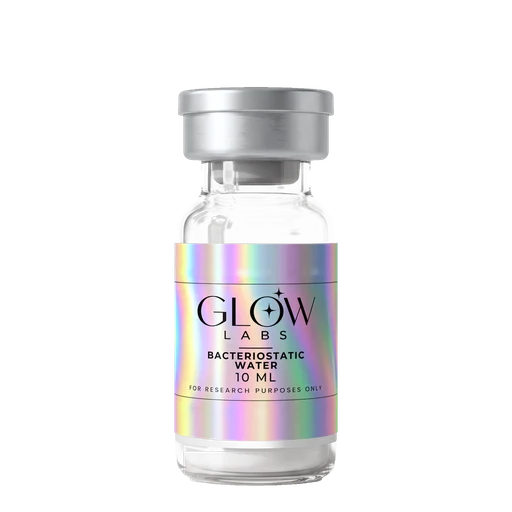
When it is time to dissolve the powder, a sterile liquid such as bacteriostatic water is common. The steps are in our guide on reconstituting peptides, and full storage details are in how to store peptides.
Sources: Ó'Fágáin C, Colliton K, Storage and lyophilization of pure proteins, Methods Mol Biol, 2023. Bachem, Handling and storage guidelines for peptides, Knowledge Center.
FAQ
Should I refrigerate lyophilized peptides?
Yes. A fridge is fine for short holding and a freezer is better for long holding. Peptide makers advise storing the dry powder in a tightly closed container below about -15 °C for long periods, with colder still being better.
How long does a lyophilized peptide last?
It depends on the peptide's sequence and how it is stored. Sealed, cold and dry storage gives the longest life. Peptides containing certain amino acids, such as methionine, cysteine or tryptophan, tend to keep for less time.
Are lyophilised and lyophilized the same?
Yes. Lyophilised is the Australian and British spelling and lyophilized is the US spelling. Both mean freeze-dried.
What are lyophilized peptides used for?
In the lab, freeze-drying is a way to hold a peptide steady until it is needed. A 2022 review notes that the method gives delicate products long-term stability and makes them easier to transport. Research peptides are supplied as dry powder for this reason, and the powder is dissolved in a sterile liquid only when the lab work begins.
Sources: Abla KK, Mehanna MM, Freeze-drying: a flourishing strategy to fabricate stable pharmaceutical and biological products, Int J Pharm, 2022. Bachem, Handling and storage guidelines for peptides, Knowledge Center.
Sources
- Abla KK, Mehanna MM, Freeze-drying: a flourishing strategy to fabricate stable pharmaceutical and biological products, Int J Pharm, 2022.
- Tang X, Pikal MJ, Design of freeze-drying processes for pharmaceuticals: practical advice, Pharm Res, 2004.
- Tchessalov S et al, Practical advice on scientific design of freeze-drying process: 2023 update, Pharm Res, 2023.
- Ó'Fágáin C, Colliton K, Storage and lyophilization of pure proteins, Methods Mol Biol, 2023.
- Lai MC et al, Solid-state chemical stability of proteins and peptides, J Pharm Sci, 1999.
- Nugrahadi PP et al, Designing formulation strategies for enhanced stability of therapeutic peptides in aqueous solutions: a review, Pharmaceutics, 2023.
- Ohori R et al, Int J Pharm, 2019.
- Ohori R et al, Eur J Pharm Biopharm, 2018.
- Bachem, Handling and storage guidelines for peptides, Knowledge Center.
- Merutka G et al, Stability of lyophilized teriparatide, PTH(1-34), after reconstitution, Eur J Pharm Biopharm, 2016.