The short answer
Reconstitution means turning a freeze-dried, or lyophilised, peptide back into a solution. The powder is kept dry on purpose, because peptides are often unstable in water and moisture can speed up their breakdown. Once you add liquid, that clock starts running, so the goal is to dissolve the peptide with as little stress as possible.
- Let the sealed vial reach room temperature.
- Wipe the rubber stopper on the powder vial and on the liquid vial with alcohol, and let them dry.
- Add the sterile liquid slowly, aimed at the inside wall of the vial.
- Swirl or roll the vial gently until the powder dissolves.
- Check that the solution is clear and free of specks.
- Label it with the compound and the date, then store it cold and dark.
Sources: Nugrahadi PP et al, Designing formulation strategies for enhanced stability of therapeutic peptides in aqueous solutions: a review, Pharmaceutics, 2023. Lai MC et al, Solid-state chemical stability of proteins and peptides, J Pharm Sci, 1999.
Questions about this guide?
Ask on WhatsAppWhat you need
Keep the kit simple and clean. Every item below matters more than any brand name.
- The sealed vial of powder, with its label intact
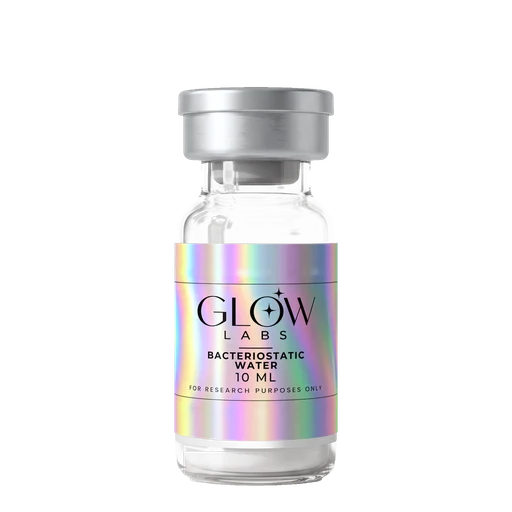
- A sterile liquid suited to the compound, such as bacteriostatic water or sterile water
- Alcohol swabs for the stoppers
- A clean, uncluttered work surface
- Disposable gloves
- Sterile, single-use transfer equipment for moving the liquid
- A waterproof label and a pen
A multi-use liquid vial is the reason a preservative matters. Each time a stopper is pierced, there is a chance of bringing in microbes. Preservatives such as benzyl alcohol are added to some liquids to slow microbial growth between entries.
Steps and why
Here is each step with the reason behind it, drawn from formulation science.
| Step | What can go wrong if you skip it |
|---|---|
| Warm the sealed vial to room temperature | Cold glass pulls moisture from the air. Water on dry powder starts breakdown early |
| Wipe both stoppers and let them air dry | Microbes on the rubber can be carried into the vial |
| Aim the liquid at the glass wall | A jet onto the powder can foam. Foam creates air and liquid surfaces where peptides unfold and clump |
| Swirl or roll, never shake | Shaking adds surface stress, which drives clumping, also called aggregation |
| Give it time to dissolve | Forcing it with heat or shaking adds stress. Some powders simply need a few minutes |
| Keep it out of bright light | Light can oxidise some amino acids, such as tryptophan and cysteine |
The powder itself is not immune to change. Dry peptides can still break down slowly, and moisture and warmth make it faster. That is why the vial stays sealed until the last moment.
Sources: Manning MC et al, Stability of protein pharmaceuticals: an update, Pharm Res, 2010. Lai MC et al, Solid-state chemical stability of proteins and peptides, J Pharm Sci, 1999. Kerwin BA et al, Protect from light: photodegradation and protein biologics, J Pharm Sci, 2007.
Choosing the liquid
The two common choices are bacteriostatic water and sterile water. Bacteriostatic water is sterile water with benzyl alcohol added as a preservative, so the vial can be entered more than once. Ordinary sterile water carries nothing extra, so each container is opened once and the rest thrown away.
The US product label for bacteriostatic water also says to follow the maker of the dissolved substance on the choice of liquid. Some compounds need a different liquid entirely. If the compound's supplier names a specific one, that advice comes first. For a side by side look at both liquids, read bacteriostatic water vs sterile water.
Sources: Stroppel L et al, Antimicrobial preservatives for protein and peptide formulations: an overview, Pharmaceutics, 2023. Hospira, Bacteriostatic Water for Injection, USP: product label, DailyMed, US National Library of Medicine.
Clear or cloudy?
A well-dissolved peptide solution is usually clear and colourless. Look at the vial against a light and a dark background before you put it away.
- Clear, no specks: what you would expect.
- Foam on top: often from adding liquid too fast. Let it settle without shaking.
- Cloudy or hazy: can mean the peptide has not fully dissolved, or that it is clumping.
- Visible specks or threads: a sign of particles. Set the vial aside rather than using it in your work.
Particles are not just a cosmetic problem. A US FDA study of freeze-dried secretin found the stored powder took longer to dissolve and formed larger particles once mixed. The US label for bacteriostatic water gives the same simple rule: check that a dissolved product is clear and free of unexpected solids before use.
The TGA has also warned that unapproved peptide products may not be sterile and may carry inaccurate labels. That is one more reason to look closely at every vial and to keep your own records.
Sources: Srinivasan C et al, Stability characterization and appearance of particulates in a lyophilized formulation of a model peptide hormone, human secretin, Int J Pharm, 2015. Hospira, Bacteriostatic Water for Injection, USP: product label, DailyMed, US National Library of Medicine. Therapeutic Goods Administration, Understanding your responsibilities when importing, compounding and supplying unapproved peptide products, Safety advisory, 13 April 2026.
After mixing
Write the compound name and the date you mixed it on the vial. An unlabelled clear liquid is impossible to tell apart from any other.
A dissolved peptide is far less stable than the dry powder. The basics are well established in formulation science: keep it in the fridge, upright, away from light, and do not freeze and thaw it again and again. Each freeze and thaw exposes the molecules to ice surfaces that can damage them.
How long a solution lasts depends on the molecule, the liquid and the temperature. One study of the peptide teriparatide found visible solids within weeks in some samples after mixing. There is no single day count that fits every peptide. Our guide on how to store peptides covers the details.
Sources: Nugrahadi PP et al, Designing formulation strategies for enhanced stability of therapeutic peptides in aqueous solutions: a review, Pharmaceutics, 2023. Merutka G et al, Stability of lyophilized teriparatide, PTH(1-34), after reconstitution, Eur J Pharm Biopharm, 2016. Cao E et al, Effect of freezing and thawing rates on denaturation of proteins in aqueous solutions, Biotechnol Bioeng, 2003.
Common mistakes
Run through this list before you start.
- Opening a cold vial straight from the fridge
- Skipping the alcohol wipe, or touching the stopper after wiping it
- Squirting the liquid hard onto the powder
- Shaking the vial to speed things up
- Warming the vial to help it dissolve
- Using tap water, bottled water or any liquid that is not sterile
- Using a liquid the compound's maker advises against
- Leaving the vial in sunlight or on a warm bench
- Forgetting to label and date the vial
- Keeping a cloudy or speckled solution in use
Sources: Manning MC et al, Stability of protein pharmaceuticals: an update, Pharm Res, 2010. Stroppel L et al, Antimicrobial preservatives for protein and peptide formulations: an overview, Pharmaceutics, 2023. Kerwin BA et al, Protect from light: photodegradation and protein biologics, J Pharm Sci, 2007. Hospira, Bacteriostatic Water for Injection, USP: product label, DailyMed, US National Library of Medicine.
Arrival in summer
Our parcels leave Gippsland in Victoria with tracking, and they arrive in 2-3 days. In a hot summer, a parcel can sit in a warm letterbox. A dry cake tolerates a brief bout of heat much more easily than a dissolved peptide, which is one reason research peptides travel dry. Still, move the vials somewhere cold and dark soon after they arrive. You can read more about the powder itself in our guide to lyophilized peptide basics.
Sources: Lai MC et al, Solid-state chemical stability of proteins and peptides, J Pharm Sci, 1999.
FAQ
How long do reconstituted peptides last?
It depends on the peptide, the liquid used and how it is stored. A dissolved peptide breaks down much faster than the dry powder, and published stability studies are done one molecule at a time. Keep it cold and dark, and follow any guidance from the compound's supplier.
Do you refrigerate peptides after mixing?
Yes, a mixed vial is normally kept in the fridge, upright and out of the light. Avoid freezing and thawing it repeatedly, because ice can damage the peptide.
Can I use tap or bottled water?
No. Tap and bottled water are not sterile and can carry microbes and minerals. Use a sterile liquid that suits the compound.
Why not shake the vial?
Shaking creates foam and stirs air into the liquid. Peptides can unfold and clump at those air and liquid surfaces, so a gentle swirl is safer for the molecule.
Sources: Nugrahadi PP et al, Designing formulation strategies for enhanced stability of therapeutic peptides in aqueous solutions: a review, Pharmaceutics, 2023. Manning MC et al, Stability of protein pharmaceuticals: an update, Pharm Res, 2010. Cao E et al, Effect of freezing and thawing rates on denaturation of proteins in aqueous solutions, Biotechnol Bioeng, 2003.
Sources
- Nugrahadi PP et al, Designing formulation strategies for enhanced stability of therapeutic peptides in aqueous solutions: a review, Pharmaceutics, 2023.
- Manning MC et al, Stability of protein pharmaceuticals: an update, Pharm Res, 2010.
- Lai MC et al, Solid-state chemical stability of proteins and peptides, J Pharm Sci, 1999.
- Stroppel L et al, Antimicrobial preservatives for protein and peptide formulations: an overview, Pharmaceutics, 2023.
- Merutka G et al, Stability of lyophilized teriparatide, PTH(1-34), after reconstitution, Eur J Pharm Biopharm, 2016.
- Srinivasan C et al, Stability characterization and appearance of particulates in a lyophilized formulation of a model peptide hormone, human secretin, Int J Pharm, 2015.
- Cao E et al, Effect of freezing and thawing rates on denaturation of proteins in aqueous solutions, Biotechnol Bioeng, 2003.
- Kerwin BA et al, Protect from light: photodegradation and protein biologics, J Pharm Sci, 2007.
- Hospira, Bacteriostatic Water for Injection, USP: product label, DailyMed, US National Library of Medicine.
- Therapeutic Goods Administration, Understanding your responsibilities when importing, compounding and supplying unapproved peptide products, Safety advisory, 13 April 2026.